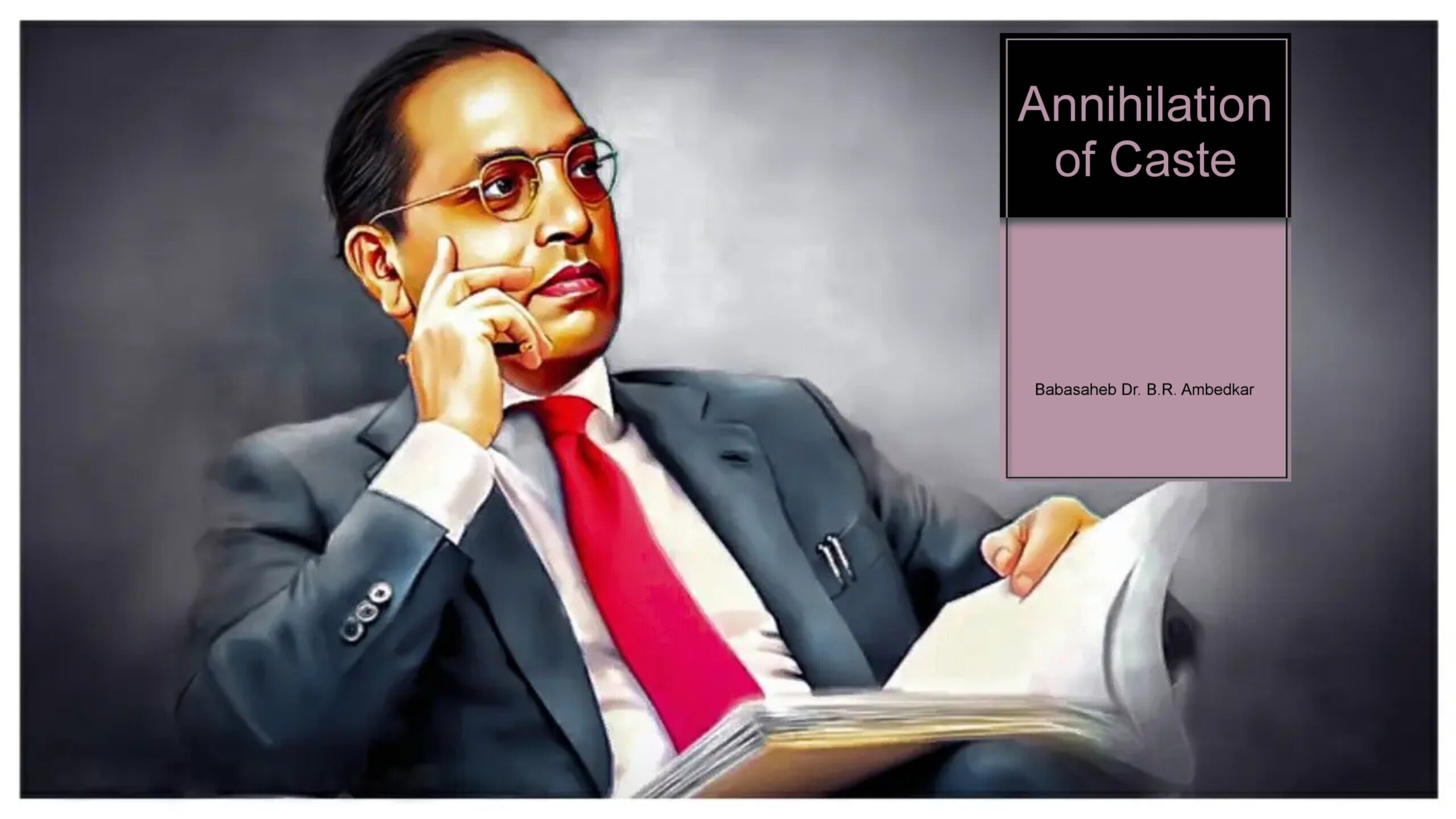
Dr. B.R. Ambedkar’s Annihilation of Caste remains one of the most influential works in modern Indian history, challenging entrenched social hierarchies and advocating for equality. Written in 1936 as a speech that was never delivered, the text became a manifesto against caste discrimination and continues to resonate globally. Ambedkar’s arguments, rooted in rationality and justice, positioned him as a pioneering voice for social reform and human rights.
Origins of the Text
Ambedkar originally prepared Annihilation of Caste for the Jat-Pat Todak Mandal, a reformist Hindu group in Lahore. However, the organizers withdrew their invitation after reading his draft, fearing its radical critique of Hindu scriptures and caste practices. Undeterred, Ambedkar published the speech independently, ensuring that his message reached a wider audience. This act of defiance underscored his commitment to truth and reform, even at the cost of controversy.
Central Arguments Against Caste
Ambedkar’s text systematically dismantles the foundations of caste. He argued that caste is not merely a division of labor but a division of laborers, perpetuating inequality and denying dignity. He criticized Hindu religious texts, particularly the Manusmriti, for legitimizing caste hierarchies. By calling for the rejection of scriptures that upheld discrimination, Ambedkar challenged the very core of traditional authority.
Religion and Social Reform
One of Ambedkar’s most provocative claims was that Hinduism, in its orthodox form, could not serve as a foundation for social equality. He urged reformers to abandon blind adherence to tradition and embrace rationality. His insistence on questioning religious authority marked a turning point in India’s reform movements, sparking debates that continue to shape discussions on faith and social justice.
Gandhi and Ambedkar: Divergent Perspectives
Ambedkar’s critique of caste brought him into direct conflict with Mahatma Gandhi. While Gandhi acknowledged the evils of untouchability, he defended the varna system as a natural division of labor. Ambedkar rejected this defense, arguing that caste was inherently oppressive and incompatible with democracy. Their debates highlighted the tension between reformist gradualism and radical restructuring, shaping the trajectory of India’s struggle for equality.
Global Relevance of Ambedkar’s Ideas
Though rooted in India’s social context, Ambedkar’s arguments resonate internationally. His call for equality aligns with global movements against racial segregation, gender discrimination, and systemic injustice. Scholars worldwide recognize Annihilation of Caste as a text that transcends national boundaries, offering insights into the universal struggle for human dignity.
Impact on Indian Society
The publication of Annihilation of Caste galvanized reform movements and inspired generations of activists. Ambedkar’s vision laid the groundwork for constitutional provisions against discrimination, including the abolition of untouchability. His insistence on education, political representation, and social mobility for marginalized communities continues to influence policy and activism in India.
Ambedkar’s Legacy
Ambedkar’s work remains a cornerstone of India’s intellectual and social history. His insistence on equality, rationality, and justice shaped the drafting of the Indian Constitution, where he served as chief architect. Annihilation of Caste stands as a testament to his unwavering commitment to dismantling oppressive structures and building a society based on liberty, equality, and fraternity.
Conclusion
Annihilation of Caste is more than a historical document; it is a living text that continues to challenge prejudice and inspire reform. Ambedkar’s fearless critique of tradition and his vision for a just society remain relevant in contemporary debates on caste, religion, and democracy. His words remind us that true progress requires confronting uncomfortable truths and striving for genuine equality.