June 01, 2026
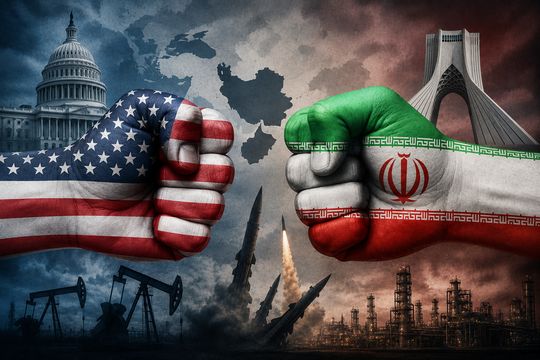
The conflict between the United States and Iran is not the result of a single event. Instead, it is the outcome of decades of political disagreements, historical grievances, ideological differences, military tensions, and disputes over Iran’s nuclear program. The relationship between the two countries has remained strained for more than four decades, and several major events have contributed to the hostility that continues today.
To understand why tensions between the United States and Iran have repeatedly escalated, it is important to examine the historical background and the strategic interests of both nations.
The Roots of the Conflict
Ironically, Iran and the United States were once close allies. During much of the 20th century, Washington maintained strong political and economic ties with Iran under Shah Mohammad Reza Pahlavi. The Shah was viewed as an important partner in the Middle East, particularly during the Cold War.
However, one of the earliest sources of resentment dates back to 1953. That year, the United States and the United Kingdom supported a coup that removed Iran’s democratically elected Prime Minister, Mohammad Mossadegh. Mossadegh had nationalized Iran’s oil industry, which threatened Western economic interests. Many Iranians viewed the coup as foreign interference in their country’s sovereignty. The event remains one of the most controversial chapters in U.S.-Iran relations.
The 1979 Islamic Revolution
The turning point in relations came in 1979 when the Iranian Revolution overthrew the Shah and established the Islamic Republic under Ayatollah Ruhollah Khomeini.
The new government strongly opposed American influence in the region and portrayed the United States as a symbol of foreign intervention. Later that year, Iranian students stormed the U.S. Embassy in Tehran and took 52 American diplomats and citizens hostage for 444 days.
The hostage crisis shocked the United States and permanently damaged relations between the two countries. Since then, Iran and the United States have lacked formal diplomatic relations.
Ideological Differences
Another major reason for the conflict is ideology. The United States and Iran have fundamentally different political systems and worldviews.
The United States promotes democratic governance and maintains strong alliances with Western countries and regional partners such as Israel and Saudi Arabia. Iran, meanwhile, operates as an Islamic Republic guided by religious leadership and often opposes American influence in the Middle East.
For decades, leaders in both countries have viewed each other with deep suspicion. This ideological divide has made diplomatic cooperation extremely difficult.
Iran’s Nuclear Program
Perhaps the most significant issue in recent years has been Iran’s nuclear program.
Iran insists that its nuclear activities are intended for peaceful purposes such as energy production and scientific research. However, the United States and several of its allies have long feared that Iran could eventually develop nuclear weapons.
American administrations from both major political parties have repeatedly stated that Iran must not obtain a nuclear weapon. Concerns about uranium enrichment, nuclear facilities, and missile development have become central issues in negotiations between the two countries.
The Nuclear Deal and Its Collapse
In 2015, Iran and several world powers signed the Joint Comprehensive Plan of Action (JCPOA), commonly known as the Iran nuclear deal.
Under the agreement, Iran accepted restrictions on its nuclear program in exchange for relief from international economic sanctions. Many experts believed the deal significantly reduced the likelihood of Iran developing a nuclear weapon for at least several years.
However, in 2018, the United States withdrew from the agreement under President Donald Trump. The administration argued that the deal did not adequately address Iran’s missile program, regional influence, and other security concerns.
Following the U.S. withdrawal, sanctions were reimposed on Iran, and tensions rapidly increased. Iran gradually reduced its compliance with parts of the agreement, leading to renewed international concerns about its nuclear activities.
Economic Sanctions and Pressure
Economic sanctions have become one of Washington’s primary tools against Tehran.
The United States has imposed sanctions targeting Iran’s banking sector, oil exports, trade networks, and financial institutions. American officials argue that sanctions are intended to pressure Iran into changing its policies and limiting its nuclear activities.
Iran, on the other hand, views many of these sanctions as economic warfare. The restrictions have significantly affected the Iranian economy, leading to inflation, currency instability, and economic hardship. These measures have further intensified hostility between the two countries.
Regional Influence and Proxy Conflicts
The United States and Iran also compete for influence across the Middle East.
Iran has built relationships with several armed groups and political movements in countries such as Lebanon, Iraq, Syria, Yemen, and Gaza. Tehran considers these alliances part of its regional security strategy.
The United States and many of its allies, however, argue that some of these groups threaten regional stability and American interests. Washington has frequently accused Iran of supporting militant organizations across the region.
As a result, the two countries have often found themselves on opposite sides of conflicts in the Middle East, even when they were not directly fighting each other.
Tensions with Israel
Iran’s relationship with Israel has become another major factor in the conflict.
Israel considers Iran’s nuclear ambitions and missile capabilities a serious security threat. Iranian leaders have frequently criticized Israel, while Israeli governments have pushed for stronger international action against Iran’s military and nuclear programs.
Because the United States is Israel’s closest ally, tensions between Iran and Israel often affect U.S.-Iran relations as well. Recent confrontations involving Israel, Iran, and Iranian-aligned groups have further increased the risk of broader regional conflict.
Military Escalations
Over the years, several incidents have brought the two countries close to direct conflict.
One major escalation occurred in 2020 when the United States killed Iranian General Qasem Soleimani in a drone strike in Iraq. Soleimani was one of Iran’s most influential military commanders and played a key role in shaping Iran’s regional strategy.
Iran responded with missile attacks targeting American military bases in Iraq. Although a larger war was avoided, the incident demonstrated how quickly tensions could escalate.
More recently, disputes involving military activities, missile launches, regional conflicts, and nuclear negotiations have continued to fuel tensions between Washington and Tehran.
Why the Strait of Hormuz Matters
Another important factor is the Strait of Hormuz, a narrow waterway located between Iran and the Arabian Peninsula.
Roughly one-fifth of the world’s oil supply passes through this strategic route. Any conflict involving Iran raises concerns about shipping disruptions, which can significantly impact global energy markets and oil prices.
Because of its economic importance, tensions in the region often attract global attention and international diplomatic efforts.
The Current Situation
In recent years, disputes over Iran’s nuclear program, regional military activities, sanctions, and security concerns have remained at the center of negotiations between the two countries.
Attempts to revive diplomatic agreements have repeatedly faced obstacles. Mutual distrust, differing strategic goals, and regional conflicts continue to make long-term solutions difficult. Analysts generally agree that while both sides have reasons to avoid a large-scale war, the relationship remains one of the most volatile geopolitical rivalries in the world.