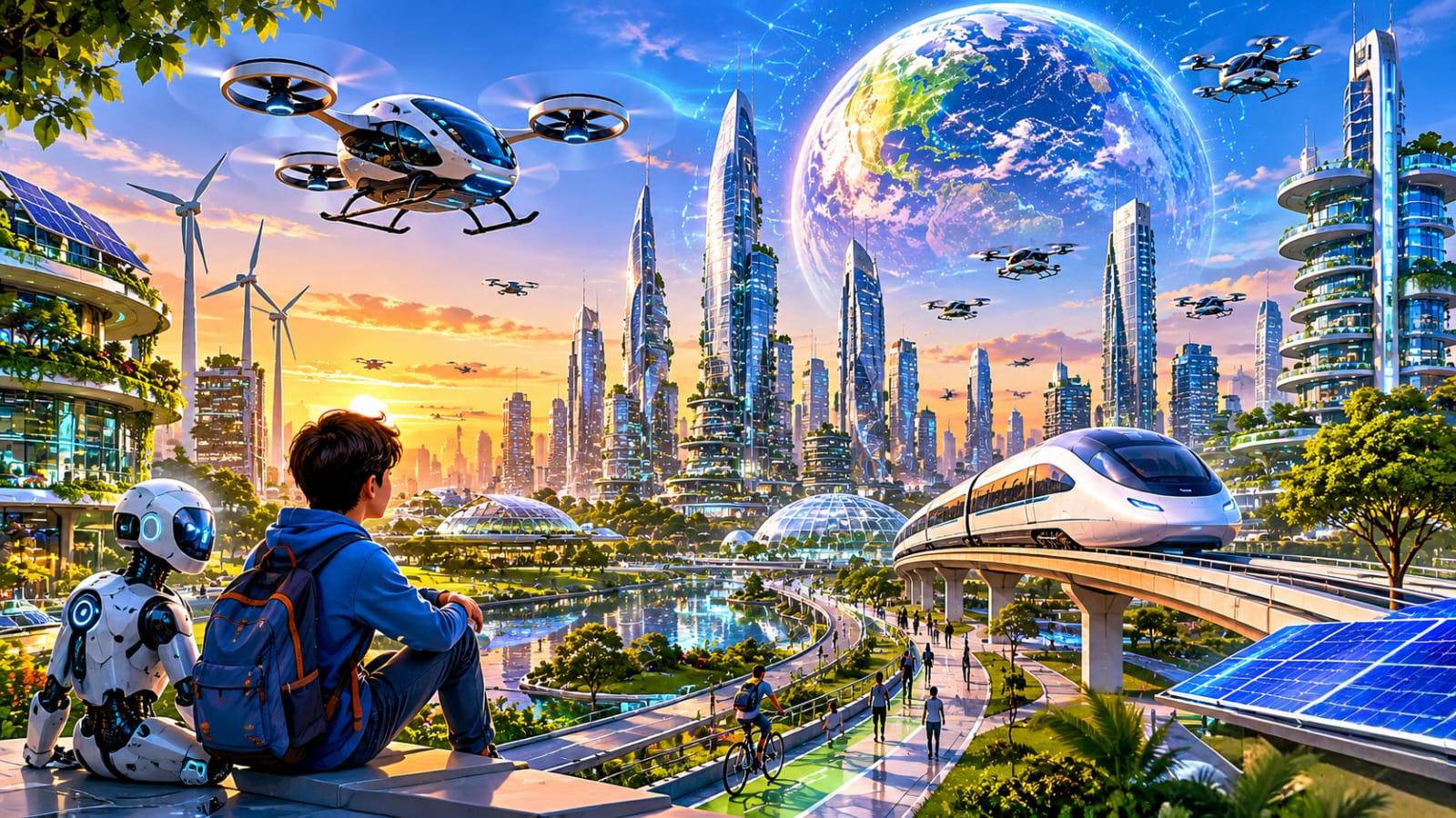
The year 2050 may seem far away, but it is closer than we think. The world has changed dramatically over the past few decades, and the pace of innovation continues to accelerate. Technologies that once existed only in science fiction—such as artificial intelligence, self-driving vehicles, and smart homes—are already becoming part of everyday life. By 2050, these advancements are expected to transform how we live, work, communicate, travel, and even think about the future.
While it is impossible to predict every detail of life in 2050, current trends provide valuable clues. The future will likely be shaped by technological breakthroughs, environmental challenges, medical innovations, and changing social values. Understanding these possibilities helps us prepare for a world that may be very different from the one we know today.
Smarter Homes and Cities
One of the most noticeable changes in 2050 will be the development of intelligent homes and cities. Houses will be equipped with advanced artificial intelligence systems capable of managing lighting, temperature, security, and household appliances automatically. Residents may simply speak commands or use thought-controlled interfaces to perform daily tasks.
Cities will also become smarter. Traffic lights will communicate with vehicles to reduce congestion, waste management systems will operate automatically, and energy consumption will be optimized through interconnected networks. Sensors placed throughout cities will monitor air quality, water usage, and public safety, creating more efficient and sustainable urban environments.
As a result, daily life could become more convenient, environmentally friendly, and productive.
Transportation Without Drivers
Transportation is expected to undergo a revolutionary transformation by 2050. Self-driving cars may become the standard mode of transportation. These vehicles will use artificial intelligence, advanced sensors, and real-time communication systems to navigate roads safely without human intervention.
Traffic accidents caused by human error could decrease significantly. Commuters may spend travel time working, studying, or relaxing instead of focusing on driving.
In addition, high-speed transportation systems could connect cities faster than ever before. Electric vehicles, flying taxis, and advanced public transportation networks may reduce travel times and lower pollution levels. Long-distance journeys that currently take hours may be completed in a fraction of the time.
Artificial Intelligence in Everyday Life
Artificial intelligence will likely become an essential part of daily life. AI assistants may manage schedules, answer questions, provide health advice, and perform countless routine tasks.
In workplaces, AI systems could handle repetitive duties, allowing humans to focus on creative thinking, problem-solving, and innovation. Businesses may rely heavily on intelligent software for decision-making and customer service.
Education could also benefit from AI. Personalized learning platforms may adapt lessons to individual students, helping them learn more effectively. Instead of a one-size-fits-all approach, education may become tailored to each learner’s strengths and weaknesses.
However, society will also need to address ethical concerns regarding privacy, employment, and the responsible use of artificial intelligence.
Revolutionary Healthcare
Healthcare in 2050 could be dramatically different from today’s medical system. Advances in biotechnology, genetics, and artificial intelligence may allow doctors to detect diseases long before symptoms appear.
Personalized medicine could become common. Treatments may be customized according to an individual’s genetic profile, increasing effectiveness while reducing side effects.
Wearable devices and health-monitoring implants might continuously track vital signs and alert doctors to potential health issues. Remote consultations using advanced communication technologies could make healthcare accessible even in remote regions.
Scientists may also make significant progress in treating diseases that are currently difficult to cure. Improvements in regenerative medicine could help repair damaged tissues and organs, extending healthy lifespans and improving quality of life.
Changes in Education
The classroom of 2050 may look very different from today’s schools. Traditional textbooks could be replaced by interactive digital platforms, virtual reality simulations, and immersive learning experiences.
Students may explore historical events through virtual environments or conduct scientific experiments in digital laboratories. Learning could become more engaging and practical.
Artificial intelligence tutors might provide instant feedback and personalized guidance. Education may become a lifelong process rather than something limited to childhood and early adulthood. As technology evolves rapidly, people will continually update their skills throughout their lives.
This shift could create a workforce that is more adaptable and prepared for changing economic demands.
The Future of Work
Automation and artificial intelligence will significantly influence employment. Many routine jobs may become automated, while entirely new professions emerge.
Skills such as creativity, emotional intelligence, leadership, critical thinking, and innovation will become increasingly valuable. Workers may collaborate closely with intelligent machines rather than compete against them.
Remote work is also likely to become more common. Advanced communication technologies may allow people to work effectively from almost anywhere in the world. Virtual offices and immersive digital workplaces could replace many traditional office environments.
Governments, businesses, and educational institutions will need to adapt to these changes by helping workers acquire new skills and opportunities.
Environmental Sustainability
Climate change and environmental protection will remain major global concerns. By 2050, societies may rely heavily on renewable energy sources such as solar, wind, and advanced battery technologies.
Buildings could generate their own energy, and transportation systems may operate primarily on clean power. Recycling technologies may become more efficient, reducing waste and conserving natural resources.
Urban farming and innovative agricultural methods could help feed growing populations while minimizing environmental impact. Scientists may develop solutions that improve food production, water conservation, and ecosystem protection.
The success of these efforts will play a critical role in determining the quality of life for future generations.
Communication and Social Interaction
Communication technologies will continue evolving. Language barriers may become less significant as real-time translation systems enable instant conversations between people speaking different languages.
Virtual reality and augmented reality could create highly immersive social experiences. Friends, family members, and colleagues separated by great distances may interact in realistic digital environments that feel almost identical to face-to-face meetings.
Social media platforms may evolve into entirely new forms of digital communities. While technology will increase connectivity, society will also face challenges related to privacy, misinformation, and maintaining meaningful human relationships.
Balancing technological convenience with genuine human connection will remain important.
Space Exploration and Beyond
By 2050, humanity may achieve remarkable milestones in space exploration. Permanent research stations on the Moon or missions to Mars could become reality.
Private companies and national space agencies may collaborate to develop advanced spacecraft and sustainable space habitats. These efforts could lead to scientific discoveries, technological innovations, and new economic opportunities.
Space exploration may also inspire future generations to pursue careers in science, engineering, and technology, expanding humanity’s understanding of the universe.
Challenges of the Future
Despite exciting possibilities, life in 2050 will not be without challenges. Issues such as cybersecurity threats, data privacy concerns, economic inequality, and ethical questions surrounding artificial intelligence will require careful attention.
Governments, businesses, and citizens must work together to ensure that technological progress benefits everyone rather than a select few. Responsible innovation will be essential for creating a future that is both advanced and fair.
The choices made today will influence the opportunities and challenges experienced by future generations.
Conclusion
Life in 2050 is likely to be shaped by extraordinary technological advances, smarter cities, improved healthcare, cleaner energy, and new ways of learning and working. While the future promises remarkable opportunities, it also presents significant challenges that society must address responsibly.The world of 2050 may look very different from today’s world, but one thing will remain unchanged: human curiosity and the desire to build a better future. By embracing innovation while preserving important values, humanity can create a future that is not only technologically advanced but also sustainable, inclusive, and meaningful for everyone.