June 08, 2026
Water is one of the most important factors to consider when purchasing land. A plot may have an excellent location, clear legal ownership, and strong investment potential, but if it lacks reliable water resources, its usefulness and value can be significantly affected. Whether you plan to build a home, start a farm, develop a commercial property, or simply invest for the future, understanding groundwater availability is essential.
Many buyers focus on the price, location, and legal documents of a property while overlooking the availability of water. Unfortunately, discovering water shortages after purchasing land can lead to unexpected costs and complications. This is why evaluating groundwater conditions should be a key part of the buying process.
The good news is that there are several ways to assess groundwater availability before making a purchase. By combining local knowledge, scientific methods, and proper research, buyers can make more informed decisions and reduce risk.
Why Groundwater Matters
Groundwater is the water stored beneath the earth’s surface in soil, sand, and rock formations. It serves as a major source of water for homes, farms, industries, and communities.
In many regions, especially rural and semi-urban areas, groundwater is the primary source of water. Borewells and open wells draw water from underground aquifers and provide a reliable supply throughout the year.
Without adequate groundwater, property owners may face challenges related to construction, agriculture, daily household use, and future development.
For this reason, understanding groundwater conditions before buying land is just as important as verifying legal ownership.
Start by Talking to Local Residents
One of the simplest and most effective ways to gather information is by speaking with people who live nearby.
Local residents often have years of experience with the area’s water conditions. They can provide valuable information about borewell depths, seasonal water levels, water quality, and shortages during dry periods.
Ask questions about how deep their borewells are, whether water is available throughout the year, and whether they experience significant declines during summer months.
Because local residents deal with these conditions daily, their observations can provide practical insights that are difficult to find elsewhere.
Observe Nearby Wells and Borewells
Existing wells can reveal a great deal about groundwater conditions.
If neighboring properties have functioning borewells, take note of their depth and usage. Multiple successful borewells in the surrounding area often indicate favorable groundwater potential.
Pay attention to whether wells appear active throughout the year or only during rainy seasons. Consistent water availability is generally a positive sign.
If possible, speak with property owners about the amount of water their wells produce and how frequently they use them.
This information can help create a clearer picture of local groundwater conditions.
Understand the Local Geography
The physical characteristics of the land can influence groundwater availability.
Low-lying areas often collect more rainwater and may experience better groundwater recharge. Valleys, plains, and regions near rivers, lakes, ponds, or reservoirs frequently have greater groundwater potential.
On the other hand, rocky hilltops and elevated areas may have limited water storage capacity beneath the surface.
Understanding the local terrain helps buyers identify areas where groundwater is more likely to be available.
While geography alone cannot guarantee water, it can provide useful clues about underground conditions.
Pay Attention to Vegetation
Natural vegetation can sometimes indicate groundwater availability.
Areas with healthy trees, dense greenery, and plants that remain vibrant during dry seasons may have access to underground moisture.
Large trees often develop deep root systems that reach water stored beneath the surface.
Although vegetation should never be considered definitive proof of groundwater, it can serve as an additional indicator when combined with other observations.
A landscape that remains green despite limited rainfall may suggest favorable groundwater conditions.
Study Rainfall Patterns
Groundwater depends heavily on rainfall.
When rain falls, some of the water seeps into the ground and replenishes underground aquifers. Areas that receive consistent rainfall generally experience better groundwater recharge than regions with prolonged drought conditions.
Before purchasing land, research the area’s average annual rainfall and seasonal weather patterns.
Understanding long-term rainfall trends can help determine whether groundwater resources are likely to remain sustainable over time.
Regions with strong recharge rates often provide more reliable access to water.
Review Government Groundwater Data
Many government agencies collect and publish information about groundwater resources.
These reports often include data on water levels, recharge rates, aquifer conditions, and water quality. Reviewing these resources can provide valuable scientific information about an area’s groundwater situation.
Government groundwater maps can help identify regions where water is abundant, limited, or declining.
This information is particularly useful for buyers considering large investments or agricultural projects that require substantial water resources.
Official data adds an extra layer of confidence to the decision-making process.
Conduct a Professional Groundwater Survey
For buyers making significant investments, a professional groundwater survey is often worthwhile.
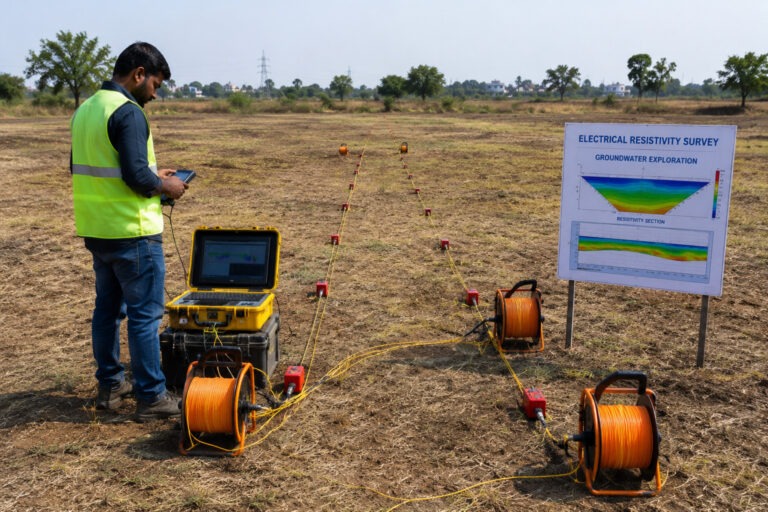
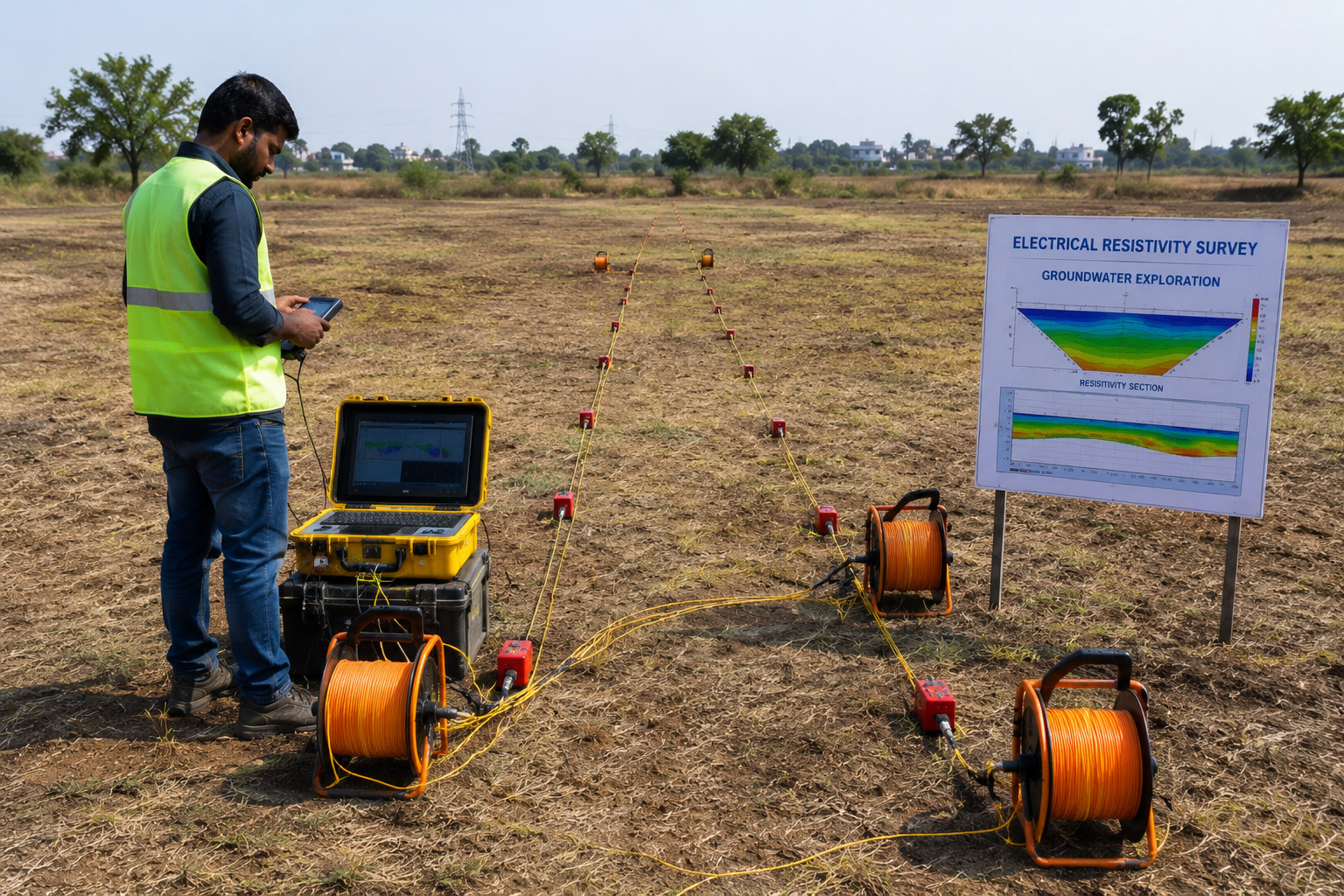
Experts use specialized equipment to study underground geological formations and identify potential water-bearing zones. One common method involves electrical resistivity testing, which analyzes how electrical currents move through the ground.
Different rock and soil formations conduct electricity differently. By measuring these variations, experts can estimate the location and depth of potential groundwater sources.
While no survey can guarantee success, professional assessments are generally far more reliable than guesswork.
A survey can also help determine the most suitable location for drilling a borewell if the property is purchased.
Learn About Borewell Records
Local drilling contractors often maintain records of borewell projects completed in the area.
These records may include information about drilling depths, geological formations, water yields, and success rates.
Because drilling contractors work directly with underground conditions, they often have practical knowledge that can be extremely valuable.
Consulting experienced drilling professionals can provide additional insights into local groundwater conditions and expected drilling requirements.
Their experience can help buyers avoid costly mistakes.
Consider Seasonal Variations
Groundwater levels are not always constant throughout the year.
Some areas experience significant fluctuations between rainy and dry seasons. A borewell that performs well during monsoon periods may produce much less water during summer months.
When evaluating groundwater conditions, try to gather information from different seasons.
Understanding seasonal changes provides a more accurate assessment of long-term water availability.
Reliable year-round access is generally more important than temporary abundance during rainy periods.
Why Groundwater Can Vary Across Short Distances
One common misconception is that groundwater conditions remain identical across an entire neighborhood.
In reality, groundwater availability can vary significantly even within a few hundred meters. Geological formations beneath the surface are often irregular, creating differences in water storage and movement.
A successful borewell on one property does not automatically guarantee similar results on a neighboring plot.
This is why professional surveys and site-specific evaluations are valuable, especially for larger investments.
Every property should be assessed individually.
Combining Different Methods
The most reliable approach is not to depend on a single source of information.
Instead, combine observations from local residents, nearby wells, government reports, professional surveys, and geological assessments.
Each method contributes a different piece of the overall picture.
When multiple indicators point toward strong groundwater potential, buyers can proceed with greater confidence.
A comprehensive evaluation reduces uncertainty and helps ensure that the property meets future water requirements.
Making a Confident Land Purchase
Buying land is a major investment, and water availability should never be treated as an afterthought. Reliable groundwater can significantly influence the property’s usability, value, and long-term potential.
By researching local conditions, speaking with residents, studying official data, inspecting nearby wells, and seeking professional advice when necessary, buyers can make informed decisions and avoid unpleasant surprises after purchase.
A plot with strong groundwater resources offers more than convenience. It provides security, flexibility, and greater opportunities for future development. Taking the time to evaluate water availability before buying land can be one of the smartest decisions a property investor or future homeowner makes.