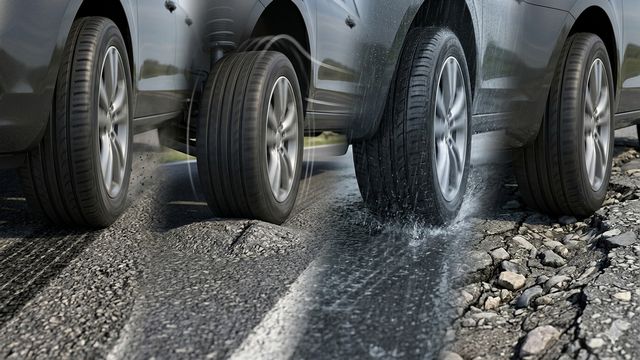
Every vehicle on the road depends on four small contact patches where the tyres meet the ground. These patches are the only points connecting a car, motorcycle, truck, or bus to the road surface. Despite carrying heavy loads, absorbing shocks, providing grip, and enduring harsh weather conditions, tyres perform their job remarkably well.
One question many people never think about is why tyres are made primarily of rubber. After all, vehicles contain materials such as steel, aluminum, and plastic, each chosen for specific reasons. Why not make tyres from harder materials that might last longer? Why has rubber remained the preferred choice for more than a century?
The answer lies in the unique properties of rubber. Few materials can match its combination of flexibility, durability, grip, shock absorption, and safety. Understanding why rubber became the foundation of modern tyres reveals an interesting story of engineering, physics, and material science.
The Importance of Tyres
Before discussing rubber itself, it helps to understand what a tyre must do.
A vehicle tyre performs several tasks simultaneously. It supports the weight of the vehicle, transfers engine power to the road, provides steering control, absorbs bumps, assists braking, and maintains stability during turns.
These demands are enormous.
A tyre must perform reliably on smooth highways, rough roads, wet surfaces, hot summer days, and cold winter mornings. It must also withstand thousands of kilometers of continuous use.
Very few materials can meet all these requirements effectively.
Rubber Provides Excellent Grip
One of the most important reasons tyres are made of rubber is traction.
Traction refers to the grip between the tyre and the road surface. Without sufficient traction, vehicles would struggle to accelerate, brake, or turn safely.
Rubber has a unique ability to conform slightly to the tiny irregularities found on road surfaces. Even roads that appear smooth contain countless microscopic bumps and grooves.
When a rubber tyre contacts the road, it molds itself around these imperfections, increasing the contact area and creating stronger friction.
This friction allows drivers to maintain control of their vehicles under a wide range of conditions.
Without adequate grip, driving would become significantly more dangerous.
Flexibility Improves Performance
Unlike metals and many hard materials, rubber is highly flexible.
This flexibility allows tyres to adapt to changing road conditions. When a vehicle encounters a pothole, speed bump, or uneven surface, the tyre deforms temporarily and then returns to its original shape.
This ability helps maintain contact with the road.
Continuous contact is essential because a tyre can only provide grip when it is touching the surface beneath it.
If tyres were rigid, vehicles would bounce excessively, reducing stability and making driving uncomfortable.
Rubber’s flexibility helps solve this problem naturally.
Shock Absorption and Comfort
Another major advantage of rubber is its ability to absorb impacts.
Roads are never perfectly smooth. Small cracks, stones, bumps, and imperfections constantly create vibrations.
Rubber absorbs much of this energy before it reaches the vehicle’s suspension system and passengers.
This makes rides more comfortable and reduces stress on vehicle components.
Without rubber tyres, every bump would be transmitted directly into the vehicle, creating a much harsher driving experience.
The cushioning effect of rubber contributes significantly to ride quality.
Durability Under Stress
Vehicle tyres experience tremendous forces.
They endure constant friction with the road, repeated impacts, rapid acceleration, hard braking, and changing weather conditions.
Rubber is remarkably resilient under these stresses.
It can stretch, compress, and flex millions of times without breaking. This durability allows tyres to operate safely for years under normal driving conditions.
Modern tyre manufacturers further enhance durability by combining rubber with reinforcing materials such as steel belts and synthetic fibers.
The result is a product that balances flexibility with strength.
Why Not Use Metal Wheels Directly?
At first glance, metal might seem like a durable alternative.
However, metal wheels without rubber tyres would create serious problems.
Metal provides very little grip on typical road surfaces. Vehicles would struggle to stop quickly or maintain control during turns.
Metal also absorbs very little shock. Every bump and vibration would be transmitted directly to the vehicle and its occupants.
Additionally, metal-on-road contact would generate excessive noise and accelerate wear on both roads and vehicles.
Rubber solves these problems while remaining practical and cost-effective.
Performance in Wet Conditions
Driving in wet weather presents unique challenges.
Water reduces friction between tyres and the road, increasing the risk of skidding.
Rubber performs particularly well in these conditions because it maintains flexibility and grip even when roads are wet.
Tyre tread patterns work together with rubber compounds to channel water away from the contact surface.
This helps maintain traction and improves safety during rain.
The combination of specialized tread designs and carefully engineered rubber compounds is one reason modern vehicles remain controllable in challenging weather.
Natural and Synthetic Rubber
Modern tyres do not rely solely on natural rubber.
Natural rubber is obtained from latex produced by rubber trees. It provides excellent flexibility and resilience.
However, tyre manufacturers also use synthetic rubber created through chemical processes.
Synthetic rubber offers additional advantages such as improved wear resistance, heat tolerance, and performance consistency.
Most modern tyres contain a carefully engineered blend of natural and synthetic rubber, along with carbon black, silica, steel, and other materials.
This combination allows manufacturers to optimize performance for specific applications.
The Science of Tyre Compounds
Not all rubber tyres are identical.
Different vehicles require different performance characteristics. A racing car, family sedan, motorcycle, truck, and off-road vehicle all place unique demands on their tyres.
Engineers therefore develop specialized rubber compounds.
Some compounds prioritize grip, while others focus on longevity or fuel efficiency.
Soft compounds often provide superior traction but wear out more quickly. Harder compounds generally last longer but may offer slightly less grip.
Finding the right balance is one of the most important challenges in tyre design.
Heat Resistance Matters
As tyres roll along the road, friction generates heat.
At highway speeds, tyres can become surprisingly warm. Excessive heat can damage materials and reduce performance.
Rubber is particularly useful because it can tolerate repeated heating and cooling cycles while maintaining its essential properties.
Modern tyre compounds are engineered to manage heat effectively, helping improve safety and extend tyre life.
This thermal resilience is another reason rubber remains the preferred material for tyre manufacturing.
Environmental Considerations
The tyre industry continues searching for ways to improve sustainability.
Researchers are developing new rubber compounds, alternative raw materials, and improved recycling methods.
Many manufacturers are exploring renewable resources and environmentally friendly production techniques.
Despite these efforts, rubber remains central to tyre construction because no alternative material currently matches its overall combination of performance, safety, durability, and cost-effectiveness.
Future innovations may change how tyres are produced, but rubber is likely to remain an essential ingredient for years to come.
A Material Perfectly Suited for the Job
The widespread use of rubber in vehicle tyres is not an accident. It is the result of decades of engineering and scientific understanding. Rubber provides excellent grip, flexibility, shock absorption, durability, and safety—qualities that are essential for reliable transportation.
Every time a vehicle accelerates, brakes, turns, or travels over uneven roads, rubber tyres are working continuously to maintain control and comfort. Their ability to adapt to changing conditions while enduring enormous stresses makes them one of the most important components of modern transportation.
The next time you see a vehicle on the road, remember that its tyres are far more than simple black circles. They are carefully engineered products built around a remarkable material that helps keep billions of people moving safely every day.