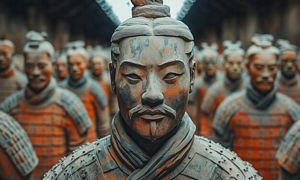
More than two thousand years ago, in ancient China, a military thinker named Sun Tzu wrote a book that would outlive kingdoms, emperors, and entire civilizations. That book was The Art of War, a short but powerful guide on strategy, leadership, intelligence, and human behavior.
Sun Tzu was not simply a warrior who believed in fighting harder than the enemy. In fact, he believed the opposite. According to him, the greatest victory is the one achieved without unnecessary bloodshed. To Sun Tzu, true strength was not about destruction. It was about understanding people, predicting reactions, and winning before the battle even began.
His ideas were originally written for military commanders, but over time they spread far beyond the battlefield. Political leaders, business executives, sports coaches, negotiators, and even psychologists study his teachings today. The reason is simple: human nature has not changed very much. People still react to fear, pride, confusion, pressure, and deception in the same ways they did centuries ago.
War, According to Sun Tzu, Begins in the Mind
One of Sun Tzu’s most famous ideas is this: “All warfare is based on deception.”
At first glance, this sounds harsh or manipulative. But Sun Tzu was trying to explain something deeper about conflict. In every struggle — whether military, political, or personal — perception matters. People make decisions based on what they think is true, not always on reality itself.
Because of this, the smartest strategist does not rush directly into confrontation. Instead, they shape the enemy’s thinking. They create confusion, overconfidence, fear, hesitation, or false security.
To Sun Tzu, the battle is often won psychologically long before swords are drawn.
The Five Foundations of Victory
Sun Tzu believed every successful leader must understand five essential elements before taking action. Without them, even a powerful army could collapse.
1. The Way – Unity Between Leader and People
The first principle is called “The Way,” sometimes translated as moral law or shared purpose.
Sun Tzu believed people fight harder when they trust their leader. If soldiers believe their commander is selfish, cruel, or dishonest, fear spreads quickly. But when people feel respected and protected, they become loyal even during hardship. For Sun Tzu, leadership was not simply about giving orders. It was about creating unity.
A divided army is weak, no matter how large it is. A united group can survive enormous pressure because everyone believes they are fighting for the same purpose.
This idea applies far beyond war. Companies fail when employees lose trust in leadership. Nations weaken when citizens stop believing in those governing them. Even families struggle when honesty and trust disappear. Sun Tzu understood that unity creates strength long before weapons ever do.
2. Paradise – Understanding Nature and Timing
The second element involves environmental conditions — weather, seasons, temperature, daylight, and natural timing.
Ancient wars depended heavily on nature. Heavy rain could destroy supply routes. Winter could freeze armies. Summer heat could exhaust soldiers before combat even started. Sun Tzu believed wise leaders never ignore nature. Instead of fighting against circumstances, they adapt to them.
Timing, to him, was everything.
A brilliant strategy used at the wrong moment could fail completely. Meanwhile, an ordinary plan executed at the perfect time could succeed. Even today, timing determines success in politics, business, relationships, and life decisions. Sun Tzu’s lesson was simple: intelligence is not just knowing what to do — it is knowing when to do it.
3. The Land – Knowing the Terrain
Sun Tzu placed enormous importance on geography. A commander who understands the terrain understands opportunity. Mountains, rivers, narrow roads, forests, valleys, and open plains all change the nature of a battle. Certain locations favor defense. Others are perfect for ambushes. Some areas trap armies with no escape.
To Sun Tzu, ignorance of terrain was dangerous arrogance.
But “terrain” also has a symbolic meaning today. Every situation has its own landscape — emotional, political, financial, or social. A wise person studies the environment before making decisions. You cannot succeed if you do not understand the ground you are standing on.
4. Command – The Character of the Leader
Sun Tzu believed leadership was more than authority. A commander needed specific qualities: Intelligence, courage, honesty, calmness under pressure, compassion toward people.
A reckless leader could destroy an army through impatience. A fearful leader could spread panic. An arrogant leader could underestimate danger. The best leaders, according to Sun Tzu, balance confidence with self-control. They make difficult decisions without losing clarity.
One important idea appears repeatedly in The Art of War: emotional reactions are dangerous. Anger causes mistakes. Pride blinds judgment. Desperation weakens thinking.
The ideal commander remains steady even during chaos.
5. Discipline – Order Creates Power.
An army without discipline eventually collapses, even if its soldiers are brave.
Food supplies, communication systems, equipment, schedules, training, and chain of command all matter. Victories are not achieved through passion alone. They require preparation. A disorganized force wastes energy and resources. A disciplined one moves like a single body.
Winning Without Fighting
Perhaps Sun Tzu’s most revolutionary belief was that the best victory avoids direct battle whenever possible. He saw war as expensive, destructive, and unpredictable. Even winners suffer losses. Because of this, he encouraged leaders to weaken opponents psychologically, economically, or politically before conflict even begins. To him, strategy was superior to brute force.
Appearing Weak While Being Strong
One of Sun Tzu’s most famous tactics involves deception through appearance. He advised commanders to appear weak when they were actually strong, and to appear disorganized when fully prepared.
Why? Because people often become careless when they underestimate others. An overconfident enemy stops thinking carefully. They rush forward emotionally, believing victory will be easy. That is when they become vulnerable.mSun Tzu understood human ego deeply. Pride often defeats people faster than enemies do.
Operation Fortitude: The WWII Deception That Fooled Hitler
A remarkable real-world example of Sun Tzu’s thinking happened during World War II.
Before the Allied invasion of Normandy in 1944, the Allies launched a massive deception campaign called Operation Fortitude. The goal was simple: convince Nazi Germany that the main invasion would happen somewhere else. To achieve this, fake armies were created using inflatable tanks, wooden aircraft, dummy camps, and false radio communications. Entire military movements were staged to mislead German intelligence.
The Germans became convinced the real invasion would occur near Pas-de-Calais rather than Normandy. Even after the Normandy landings began, Hitler hesitated because he still believed it might be a distraction. This confusion gave Allied forces precious time to establish control on the beaches.
The success of Operation Fortitude showed that information and perception can sometimes be more powerful than weapons themselves — exactly the kind of strategy Sun Tzu described centuries earlier.
The Trap at the Battle of Cowpens
Another example of strategic deception took place during the American Revolutionary War at the Battle of Cowpens in 1781.
American General Daniel Morgan faced British forces known for discipline and aggressive attacks. Morgan understood the British mindset. He knew they often chased retreating enemies recklessly. So he created a trap. American militia soldiers were instructed to fire a few rounds and then pretend to panic and flee. To the British, it looked like the Americans were collapsing. Excited by apparent victory, British troops rushed forward in disorder. But this “retreat” was intentional. As the British advanced, they suddenly found themselves surrounded by organized American forces waiting for them. The British line collapsed.
Morgan won not because he had superior numbers, but because he understood psychology. He manipulated enemy expectations — a perfect example of Sun Tzu’s philosophy.
Cyrus the Great and the Bloodless Victory
Sun Tzu admired leaders who could win without destroying everything. One historical example that reflects this principle is Cyrus the Great and his conquest of Babylon.
Instead of relying purely on military violence, Cyrus used intelligence, diplomacy, and political strategy. Babylon already suffered from internal dissatisfaction and political tension. Cyrus took advantage of this unrest. He presented himself not as a destroyer, but as a liberator. Historical accounts suggest that Babylon fell with surprisingly little resistance. Rather than crushing the city into ruin, Cyrus allowed many local customs and traditions to continue. This helped him gain support rather than endless rebellion.
Why Sun Tzu Hated Sieges
Sun Tzu strongly warned against long sieges. Attacking heavily defended cities drains resources, kills soldiers, weakens morale, and creates desperation. Even if the city is eventually captured, the cost may be greater than the reward. He believed impatient commanders often rushed into sieges because of pride or frustration. History repeatedly proved him right.
The First Crusade and the Cost of Impatience
During the First Crusade, armies attempting to capture Jerusalem launched repeated assaults without sufficient planning.
These attacks often resulted in terrible losses. Soldiers died from starvation, disease, exhaustion, and chaotic fighting. The emotional desire for quick victory caused commanders to make reckless decisions. Better preparation, supply management, and patience could have reduced suffering significantly. Sun Tzu believed emotion should never control strategy. Anger and urgency cloud judgment.
A calm mind sees possibilities that panic cannot.
The Real Message Behind Sun Tzu’s Philosophy
Many people think The Art of War is a book about aggression. In reality, it is more a book about restraint.
Sun Tzu did not glorify endless fighting. He believed unnecessary conflict was failure, not greatness.
The highest form of intelligence, according to him, is the ability to shape situations so skillfully that open warfare becomes unnecessary.
Although written for ancient warfare, Sun Tzu’s ideas remain surprisingly modern.