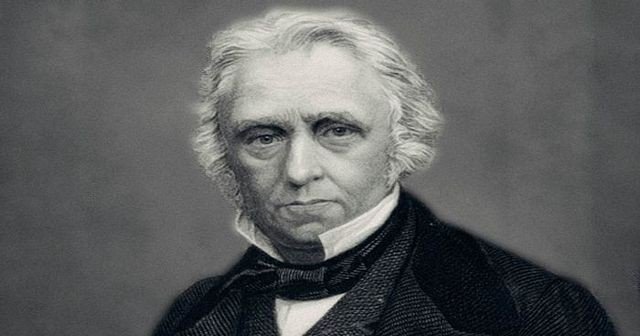
Nearly two centuries after Lord Thomas Babington Macaulay introduced English-medium education in colonial India, his influence remains deeply embedded in the nation’s institutions. From classrooms to courtrooms, Macaulay’s legacy continues to shape India’s intellectual, political, and cultural landscape. While his reforms opened doors to modern knowledge, they also displaced indigenous traditions, sparking debates that persist in contemporary education and politics.
Macaulay’s Educational Blueprint
In 1835, Macaulay presented his famous “Minute on Indian Education,” advocating English instruction over Sanskrit and Arabic. He argued that “a single shelf of a good European library was worth the whole native literature of India and Arabia.” This policy created a class of Indians fluent in English, intended to serve as intermediaries between colonial rulers and the masses. The English Education Act of 1835 institutionalized this model, sidelining traditional gurukuls and madrassas.
Impact on Modern Education
Macaulay’s framework still resonates in India’s schools and universities. English proficiency remains a prerequisite for urban employment, with nearly 70% of jobs requiring fluency. Competitive exams such as the UPSC and IIT-JEE reinforce English as a gatekeeper to opportunity. However, the New Education Policy (NEP) 2020 seeks to challenge this dominance by promoting mother-tongue instruction, aiming to improve literacy rates by 20–30% through native-language pedagogy.
Political Legacy and Law
Macaulay’s influence extended beyond education. He drafted the Indian Penal Code (IPC), enacted in 1860, which remains the backbone of India’s criminal justice system. His emphasis on codified law introduced uniformity but also reflected colonial priorities. Politically, references to the “Macaulay mindset” are often invoked by leaders seeking to critique lingering colonial attitudes in governance and policy.
Historical and Cultural Consequences
Macaulay’s reforms created a class divide. For marginalized communities, English education offered access to knowledge previously denied under caste hierarchies. Reformers like Savitribai Phule embraced English as a liberating force. Yet, for traditional scholars, it represented cultural erasure, as Sanskrit and Persian learning lost state patronage. This dual legacy—empowerment for some, displacement for others—continues to shape debates on decolonization and cultural identity.
Contemporary Relevance
Today, Macaulay’s legacy is contested. On one hand, English connects India to global commerce, science, and diplomacy. On the other, it perpetuates inequality, particularly for rural students who face higher dropout rates due to linguistic barriers. The push for indigenous languages in education reflects a broader effort to reclaim cultural heritage while maintaining global competitiveness.
Conclusion
Lord Macaulay’s reforms were designed for colonial administration, yet their impact endures in India’s education system, legal framework, and political discourse. His legacy is both enabling and limiting—opening pathways to modernity while reinforcing linguistic hierarchies. As India approaches the bicentennial of Macaulay’s Minute in 2035, the challenge lies in balancing English’s global utility with the revival of indigenous knowledge, ensuring education and politics reflect both heritage and progress.