June 01, 2026
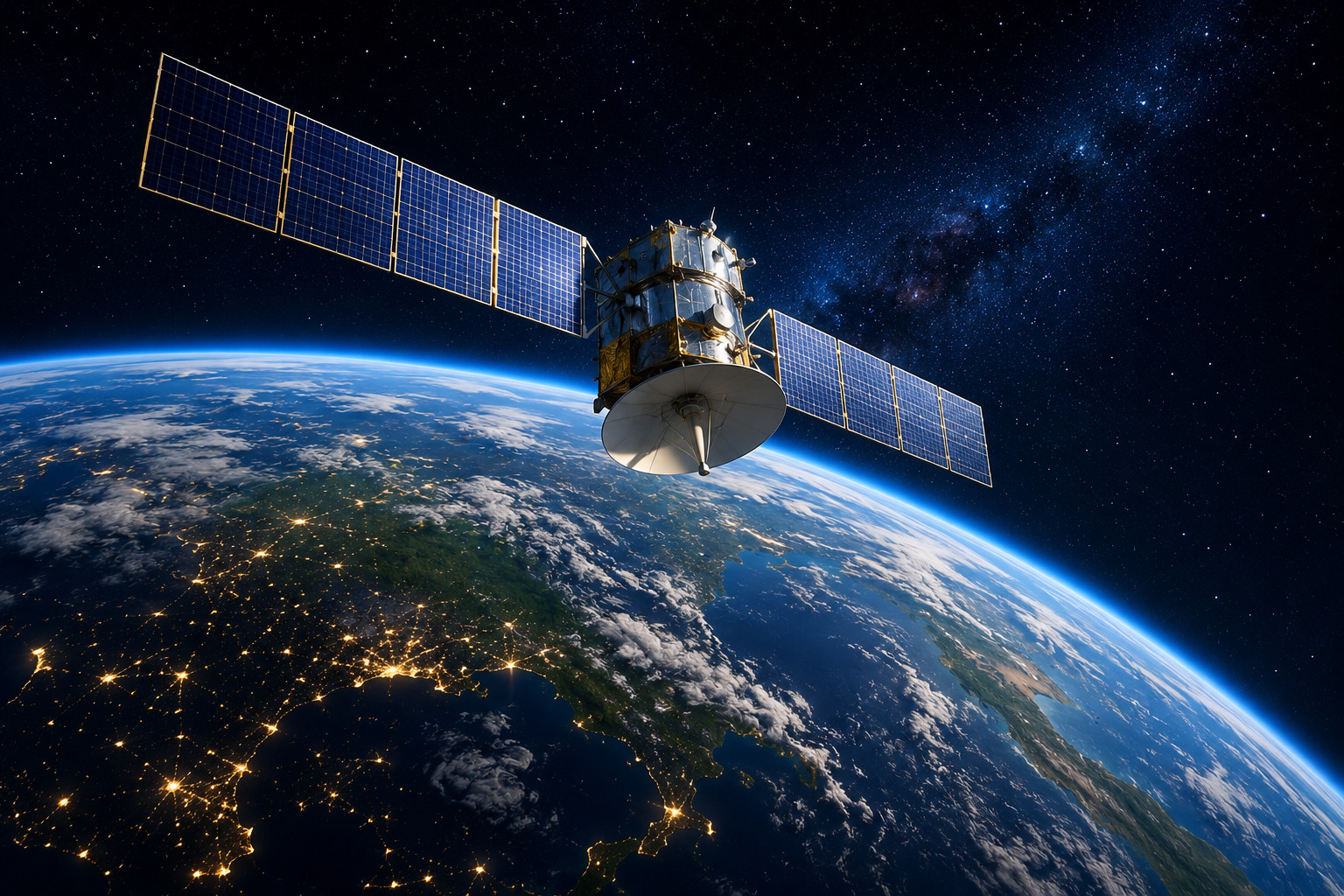
Satellites are among the most important technological achievements of the modern era. Although they orbit hundreds or even thousands of kilometers above Earth, their impact can be felt in almost every aspect of our daily lives. From mobile phone communications and internet connectivity to weather forecasting and navigation systems, satellites have become an invisible but essential part of modern society.
Many people associate satellites with space exploration, but their greatest contribution lies in supporting everyday activities on Earth. Whether we are using a smartphone, watching television, traveling with GPS, or checking the weather forecast, satellites play a vital role in making these services possible.
What Are Satellites?
A satellite is an object that revolves around another object in space. Natural satellites, such as the Moon, orbit planets naturally. Artificial satellites, on the other hand, are human-made machines launched into space for specific purposes.
Modern satellites are equipped with cameras, sensors, antennas, communication equipment, and scientific instruments. Depending on their mission, they may monitor weather patterns, relay communication signals, collect scientific data, or observe Earth’s surface.
Since the launch of the world’s first artificial satellite, Sputnik 1, in 1957, thousands of satellites have been placed in orbit, transforming the way people live and communicate.
Revolutionizing Communication
One of the most significant contributions of satellites is in communication. Before satellite technology became widespread, international communication relied heavily on undersea cables and limited transmission networks.
Today, satellites help transmit television broadcasts, radio signals, telephone calls, and internet data across vast distances. They enable people in different parts of the world to communicate almost instantly.
Satellite communication is particularly important in remote areas where traditional communication infrastructure may not exist. Villages, islands, ships, and aircraft often depend on satellite networks to stay connected.
Video conferencing, international news broadcasts, and global communication systems all benefit from satellite technology.
Enabling Global Navigation
Modern navigation systems would not be possible without satellites. Global Positioning System (GPS) technology uses a network of satellites orbiting Earth to determine precise locations.
Whenever people use navigation apps on their smartphones, satellites help calculate their position and provide directions. Drivers use satellite-based navigation to find routes, avoid traffic congestion, and reach destinations efficiently.
Navigation satellites are also used by airlines, shipping companies, emergency services, military organizations, and logistics providers. They improve transportation efficiency and contribute to safer travel worldwide.
For many people, satellite navigation has become an everyday necessity that saves time and reduces travel uncertainty.
Improving Weather Forecasting
Weather forecasting has improved dramatically due to satellites. Meteorological satellites continuously monitor Earth’s atmosphere, oceans, and cloud formations.
These satellites provide valuable information about temperature changes, storm systems, rainfall patterns, and climate conditions. Meteorologists use this data to predict weather events and issue warnings for severe conditions such as cyclones, hurricanes, floods, and heatwaves.
Accurate weather forecasting helps governments, farmers, businesses, and individuals make informed decisions. It protects lives, reduces economic losses, and improves disaster preparedness.
Without satellites, modern weather prediction would be far less accurate and reliable.
Supporting Disaster Management
Satellites play a critical role during natural disasters and emergencies. They provide real-time images and data that help authorities assess damage and coordinate rescue operations.
During floods, earthquakes, wildfires, tsunamis, and hurricanes, satellites help emergency teams identify affected areas and determine the most effective response strategies.
Satellite communication systems often remain operational even when ground-based communication infrastructure is damaged. This allows emergency responders to maintain contact and coordinate relief efforts.
As climate-related disasters become more frequent, satellite technology is becoming increasingly important for disaster management and humanitarian assistance.
Transforming Television and Entertainment
The entertainment industry relies heavily on satellites. Television channels use satellites to broadcast content to millions of households around the world.
Direct-to-home television services depend on communication satellites to deliver news, sports, movies, and educational programs. Live broadcasts of international events, including sporting competitions and global conferences, are made possible through satellite networks.
Satellites have helped make information and entertainment accessible to audiences regardless of their geographic location.
Expanding Internet Connectivity
The demand for internet access continues to grow worldwide, and satellites are helping bridge the digital divide.
Satellite internet services provide connectivity to remote and rural areas where fiber-optic cables and mobile towers may not be available. This enables people in underserved regions to access online education, healthcare services, government resources, and business opportunities.
Recent advancements in low-Earth orbit satellite networks have improved internet speeds and reduced latency, making satellite broadband increasingly competitive with traditional internet services.
Greater connectivity contributes to economic growth and social development across the globe.
Helping Agriculture and Food Production
Modern agriculture benefits significantly from satellite technology. Farmers use satellite imagery to monitor crop health, soil conditions, and irrigation requirements.
Satellite data helps identify areas affected by drought, disease, or nutrient deficiencies. This allows farmers to take corrective action quickly and improve crop yields.
Precision agriculture techniques use satellite information to optimize the use of water, fertilizers, and pesticides, reducing costs and environmental impact.
As global food demand increases, satellites are helping improve agricultural productivity and sustainability.
Environmental Monitoring
Satellites play an essential role in protecting the environment. They monitor forests, oceans, glaciers, rivers, and ecosystems around the world.
Scientists use satellite data to track deforestation, pollution, climate change, and wildlife habitats. Long-term observations help researchers understand environmental trends and develop strategies for conservation.
Satellites also help monitor air quality, greenhouse gas emissions, and changes in sea levels. These insights are valuable for governments and organizations working to address environmental challenges.
Supporting Scientific Research
Scientific satellites contribute to our understanding of Earth and the universe. They collect data on atmospheric conditions, space weather, planetary systems, and astronomical phenomena.
Research satellites help scientists study climate patterns, solar activity, and natural processes affecting life on Earth. Their findings contribute to technological advancements and improved scientific knowledge.
Many discoveries in environmental science, astronomy, and geophysics have been made possible through satellite observations.
Strengthening National Security
Governments around the world use satellites for national security and defense purposes. Surveillance satellites provide information about military activities, border security, and strategic developments.
Navigation and communication satellites support defense operations and emergency preparedness. Satellite systems help governments monitor large regions efficiently and respond to security challenges more effectively.
While much of this work occurs behind the scenes, it contributes significantly to national and international security.
The Future of Satellite Technology
Satellite technology continues to evolve rapidly. New generations of satellites are becoming smaller, more powerful, and more cost-effective.
Future satellite systems are expected to improve global internet coverage, enhance climate monitoring, support smart cities, and strengthen disaster response capabilities. Advances in artificial intelligence and data analytics will further increase the value of satellite-generated information.
As technology develops, satellites will play an even greater role in connecting people, protecting the environment, and supporting economic growth.