June 01, 2026
Food is essential for human survival. Every movement we make, every thought we think, and every heartbeat in our body requires energy. Whether a person is walking, studying, exercising, sleeping, or simply breathing, the body constantly consumes energy to perform its functions. But where does this energy come from? The answer lies in the food we eat.
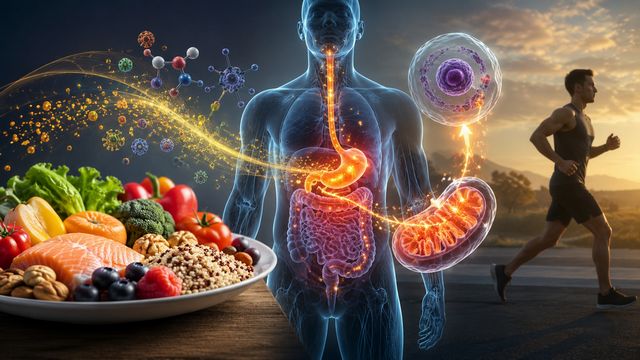
Food serves as the body’s fuel source. Through a series of complex biological and chemical processes, the human body converts food into usable energy that powers every cell, tissue, and organ. This remarkable process allows humans to grow, move, think, repair damaged tissues, and maintain overall health.
What Is Energy in the Human Body?
Energy is the ability to perform work. In the human body, energy is needed for both physical and internal activities. Walking, running, lifting objects, and exercising all require energy. At the same time, the body uses energy to pump blood, digest food, regulate temperature, repair cells, and support brain activity.
The body measures energy from food in calories. A calorie is a unit that indicates how much energy food contains. Different foods provide different amounts of calories, depending on their nutritional composition.
The energy used by the body ultimately comes from nutrients found in food.
The Main Nutrients That Provide Energy
Three major nutrients supply energy to the body: carbohydrates, fats, and proteins.
Carbohydrates are the body’s preferred source of energy. Foods such as rice, bread, fruits, potatoes, and cereals contain carbohydrates. These foods are quickly broken down into glucose, a simple sugar that cells use for fuel.
Fats serve as the body’s long-term energy reserve. Oils, butter, nuts, seeds, and fatty foods contain large amounts of fat. Fat provides more energy per gram than carbohydrates or proteins and becomes especially important during prolonged physical activity.
Proteins are primarily used for growth and repair, but they can also provide energy when necessary. Protein-rich foods include meat, fish, eggs, dairy products, beans, and legumes.
Together, these nutrients provide the fuel needed to sustain life.
The Journey Begins in the Mouth
The process of obtaining energy from food starts the moment food enters the mouth.
Chewing breaks food into smaller pieces, making it easier to digest. Saliva contains enzymes that begin breaking down carbohydrates even before the food reaches the stomach.
This initial stage of digestion prepares food for further processing in the digestive system. Although only a small amount of energy extraction occurs in the mouth, it marks the beginning of a highly coordinated process.
Digestion in the Stomach
After swallowing, food travels down the esophagus and enters the stomach.
The stomach contains strong acids and digestive enzymes that break food into a semi-liquid mixture. These substances help dismantle proteins and prepare nutrients for absorption.
Muscular contractions continuously mix the food with digestive juices, ensuring efficient breakdown. While digestion continues in the stomach, most nutrient absorption occurs later in the small intestine.
The stomach acts as a temporary processing center before nutrients move to the next stage.
Absorption in the Small Intestine
The small intestine is one of the most important organs involved in energy production.
As partially digested food enters the small intestine, enzymes from the pancreas and digestive juices from the intestine continue breaking nutrients into smaller molecules.
Carbohydrates are converted into glucose. Proteins are broken down into amino acids. Fats are separated into fatty acids and glycerol.
The walls of the small intestine contain millions of tiny finger-like structures called villi. These structures absorb nutrients and transfer them into the bloodstream.
Once nutrients enter the blood, they are transported throughout the body to cells that need energy.
Glucose: The Body’s Primary Fuel
Among all nutrients, glucose plays a particularly important role in energy production.
After carbohydrates are digested, glucose enters the bloodstream and travels to various cells. The hormone insulin, produced by the pancreas, helps glucose move from the blood into cells.
Once inside a cell, glucose can be used immediately for energy or stored for future use.
The brain relies heavily on glucose as its primary fuel source. Even when a person is resting, the brain continuously consumes energy to process information, maintain memory, and control bodily functions.
Without adequate glucose, many essential functions become impaired.
Cellular Respiration: Turning Food into Energy
The actual conversion of food into usable energy occurs inside cells through a process called cellular respiration.
Cellular respiration takes place in tiny structures known as mitochondria, often referred to as the “powerhouses” of the cell.
In this process, glucose combines with oxygen obtained from breathing. Through a series of chemical reactions, the cell produces a molecule called adenosine triphosphate, commonly known as ATP.
ATP serves as the body’s energy currency. Whenever muscles contract, nerves transmit signals, or organs perform their functions, ATP provides the necessary energy.
The process can be summarized as:
Glucose + Oxygen → Carbon Dioxide + Water + ATP (Energy)
This reaction occurs continuously throughout the body and is essential for survival.
Why Oxygen Is Important
Food alone cannot produce energy efficiently without oxygen.
When humans breathe, oxygen enters the lungs and passes into the bloodstream. The circulatory system transports oxygen to cells throughout the body.
Inside the mitochondria, oxygen helps break down glucose completely, allowing cells to produce large amounts of ATP. This process is known as aerobic respiration.
Without sufficient oxygen, cells must rely on less efficient methods of energy production, resulting in reduced performance and fatigue.
This is why breathing becomes faster during exercise. The body requires more oxygen to support increased energy demands.
Energy Storage in the Body
The human body stores excess energy for future use.
Some glucose is stored in the liver and muscles as glycogen. When blood sugar levels decrease, glycogen can be converted back into glucose and used for energy.
Excess calories that are not immediately needed are often stored as body fat. Fat serves as a long-term energy reserve that can be utilized during periods of fasting, illness, or prolonged physical activity.
These storage systems help ensure a steady supply of energy even when food is not immediately available.
How Different Activities Use Energy
Different activities require varying amounts of energy.
Simple tasks such as reading, sitting, and sleeping require relatively small amounts of energy. More demanding activities such as running, swimming, and lifting weights require significantly greater energy expenditure.
The body continuously adjusts its energy production based on activity levels. During exercise, muscles consume ATP rapidly, prompting cells to increase energy production.
Athletes often require more calories because their bodies use energy at a much higher rate than less active individuals.
The Role of Vitamins and Minerals
Although vitamins and minerals do not directly provide energy, they are essential for energy production.
Many vitamins help enzymes carry out the chemical reactions involved in converting food into ATP. Minerals such as iron assist in transporting oxygen throughout the body.
Without adequate vitamins and minerals, the body’s energy-producing systems cannot function efficiently, leading to fatigue and poor health.
This is one reason why a balanced diet is important.
What Happens When We Don’t Get Enough Food?
When food intake is insufficient, the body must rely on stored energy reserves.
Initially, glycogen stores provide energy. Once these reserves become depleted, the body begins breaking down fat for fuel. In prolonged periods of starvation, the body may also break down muscle tissue to obtain energy.
This survival mechanism allows humans to endure temporary food shortages, but long-term nutrient deficiency can lead to serious health problems.
Adequate nutrition remains essential for maintaining energy levels and overall well-being.
.