June 02, 2026
Every time you start your car and press the accelerator, a remarkable process takes place under the hood. Within seconds, thousands of tiny explosions occur inside the engine, creating the power needed to move your vehicle forward. While most people drive every day without thinking about what happens inside the engine, understanding how it works can make you appreciate the incredible engineering that powers modern transportation.
The engine is often called the heart of a car because it generates the energy needed to move the vehicle. Without it, a car would simply be a collection of metal, plastic, and electronics sitting still. But how exactly does an engine transform fuel into motion?
Let’s take a closer look at the fascinating process that powers millions of vehicles around the world.
What Is a Car Engine?
A car engine is a machine designed to convert fuel into mechanical energy. Most vehicles on the road today use an internal combustion engine, which means fuel burns inside the engine itself to produce power.
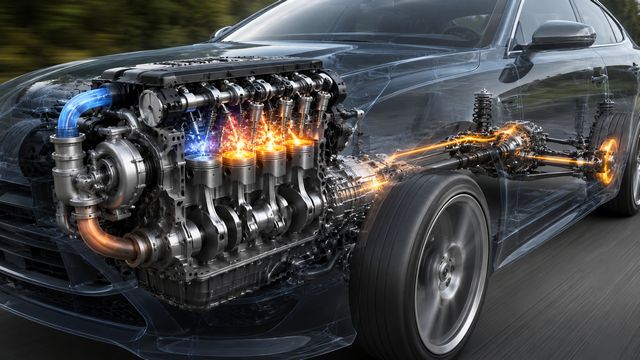
The primary job of the engine is to create controlled explosions that push components called pistons. These pistons move up and down rapidly, generating the force needed to turn the wheels.
Although modern engines contain hundreds of individual parts, the basic principle behind them remains surprisingly simple: burn fuel, create energy, and use that energy to move the car.
The Main Parts of an Engine
To understand how an engine works, it helps to know the major components involved.
At the center of the engine are cylinders. Inside each cylinder is a piston that moves up and down. The pistons connect to a crankshaft, which converts their vertical movement into rotational motion.
Spark plugs provide the spark needed to ignite the fuel-air mixture. Fuel injectors deliver fuel into the cylinders, while valves control the flow of air and exhaust gases.
These components work together with incredible precision, often completing thousands of cycles every minute.
The Four-Stroke Engine Cycle
Most gasoline-powered cars use what is known as a four-stroke engine. This system consists of four stages that repeat continuously while the engine is running.
These stages are intake, compression, power, and exhaust.
The process happens so quickly that drivers never notice the individual steps. However, each one plays a critical role in generating power.
Intake Stroke
The cycle begins with the intake stroke.
As the piston moves downward inside the cylinder, the intake valve opens. This creates a vacuum that draws a mixture of air and fuel into the cylinder.
Think of it like filling a syringe with liquid. As the piston moves down, space is created, allowing the fuel-air mixture to enter.
This mixture serves as the engine’s source of energy.
Compression Stroke
Next comes the compression stroke.
The intake valve closes, and the piston moves upward. This compresses the fuel-air mixture into a much smaller space.
Compression is important because it makes the upcoming combustion process more powerful and efficient.
The more tightly packed the mixture becomes, the greater the energy released when it ignites.
Power Stroke
This is where the real magic happens.
As the piston reaches the top of the cylinder, the spark plug produces a tiny electrical spark.
That spark ignites the compressed fuel-air mixture, creating a controlled explosion.
The explosion rapidly expands, forcing the piston downward with tremendous force.
This downward movement is what generates the power needed to drive the vehicle.
The power stroke is the only stage that actually produces energy. The other three strokes support this critical moment.
Exhaust Stroke
After combustion occurs, exhaust gases remain inside the cylinder.
The exhaust valve opens, and the piston moves upward once again.
This pushes the burned gases out of the cylinder and into the exhaust system.
Once the gases are removed, the cycle starts over.
This four-step process repeats continuously while the engine runs. At highway speeds, it can occur thousands of times every minute.
How the Crankshaft Creates Motion
The pistons move up and down, but the wheels need rotational movement.
This is where the crankshaft comes in.
The crankshaft is connected to each piston through connecting rods. As the pistons move vertically, the crankshaft converts that movement into rotation.
Imagine pedaling a bicycle. Your legs move up and down, but the pedals create circular motion. The crankshaft performs a similar function inside the engine.
The rotating crankshaft ultimately transfers power through the transmission and drivetrain to the wheels.
Why Multiple Cylinders Are Used
Many modern vehicles use four, six, or eight cylinders.
You might wonder why engines don’t simply use one large cylinder.
The answer is smoothness and efficiency.
When multiple cylinders operate together, power delivery becomes more consistent. Instead of one large explosion occurring occasionally, several smaller explosions happen in sequence.
This creates smoother acceleration, better performance, and reduced vibration.
Four-cylinder engines are common in compact vehicles because they offer good fuel efficiency. Six-cylinder engines provide additional power, while eight-cylinder engines are often found in performance cars and larger trucks.
The Role of Fuel
Fuel serves as the engine’s energy source.
Gasoline contains stored chemical energy. When it mixes with air and ignites inside the cylinders, that chemical energy transforms into heat and pressure.
The pressure generated by combustion pushes the pistons and creates mechanical energy.
Without fuel, the engine cannot produce the power needed to move the vehicle.
Modern fuel injection systems carefully measure how much fuel enters the engine to maximize performance and efficiency.
Why Air Is Just as Important
Many people focus on fuel, but air is equally important.
For combustion to occur, fuel must combine with oxygen.
The engine constantly pulls air through the intake system, where it mixes with fuel before entering the cylinders.
A healthy engine consumes a surprisingly large amount of air. In fact, for every gallon of gasoline burned, an engine uses thousands of gallons of air.
This is why clean air filters are essential for proper engine performance.
How the Cooling System Protects the Engine
The combustion process generates enormous amounts of heat.
Without cooling, engine temperatures would rise high enough to damage critical components.
To prevent overheating, vehicles use a cooling system filled with coolant.
The coolant absorbs excess heat from the engine and carries it to the radiator, where it is released into the surrounding air.
This system helps maintain safe operating temperatures and ensures the engine can function efficiently for many years.
Engine Oil: The Unsung Hero
Inside the engine, metal parts move at extremely high speeds.
Without lubrication, friction would quickly cause severe damage.
Engine oil forms a protective layer between moving components, reducing friction and wear.
It also helps remove heat and keeps internal parts clean.
Regular oil changes are one of the most important maintenance tasks because clean oil helps extend engine life and improve performance.
How Modern Engines Have Improved
Today’s engines are far more advanced than those used decades ago.
Modern vehicles use computers and sensors to monitor engine performance in real time.
These systems adjust fuel delivery, ignition timing, and air intake to maximize efficiency.
As a result, modern engines produce more power while consuming less fuel and generating fewer emissions.
Technologies such as turbocharging, direct fuel injection, and variable valve timing have significantly improved performance without increasing engine size.
Why Understanding Your Engine Matters
You don’t need to be a mechanic to benefit from understanding how an engine works.
Knowing the basics can help you identify potential problems, understand maintenance recommendations, and make informed decisions when purchasing a vehicle.
It also helps explain why routine services such as oil changes, air filter replacements, and cooling system inspections are so important.
The better you understand your engine, the better equipped you’ll be to keep your vehicle running smoothly for years.
Every journey begins with a simple process: fuel enters the engine, combustion creates power, and that power turns the wheels. While the technology behind modern engines continues to evolve, the fundamental principle remains the same—a series of controlled explosions working together to move you from one place to another.