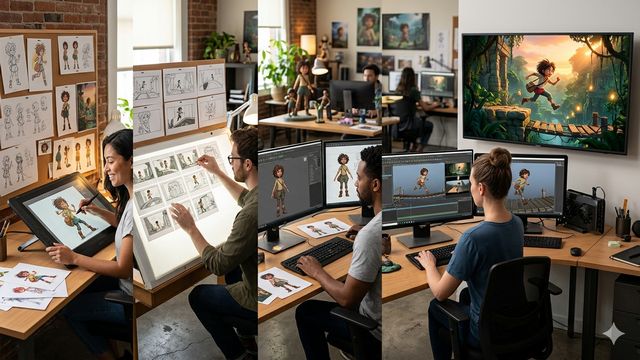
Animated films have a unique ability to bring imagination to life. They can create talking animals, magical worlds, futuristic cities, and unforgettable characters that would be difficult or impossible to film in the real world. From beloved children’s movies to visually stunning blockbusters, animation has become one of the most important forms of modern entertainment.
When audiences watch an animated movie, they often focus on the story and characters without realizing the enormous amount of work happening behind the scenes. Creating an animated film is a long and complex process that combines storytelling, art, technology, sound design, and teamwork. A feature-length animated movie can take several years to complete and involve hundreds of artists, designers, animators, and technical experts.
Understanding how animated films are made reveals the incredible effort required to transform an idea into a movie that captivates audiences around the world.
Every Animated Film Begins with an Idea
Like any movie, an animated film starts with a story.
Writers and creative teams spend months developing characters, settings, conflicts, and plotlines. They create scripts that describe what happens in each scene, how characters interact, and how the story unfolds from beginning to end.
The goal is to build a narrative that connects emotionally with viewers. Whether the story involves superheroes, animals, robots, or fantasy creatures, the foundation of every successful animated film is strong storytelling.
Before any animation begins, the story must be carefully planned and refined.
Creating Concept Art
Once the story is developed, artists begin designing the visual world of the film.
This stage is known as concept art.
Artists create drawings and paintings that explore how characters, environments, vehicles, buildings, and landscapes should look. These early designs help establish the visual style of the movie.
Directors and production teams review hundreds or even thousands of concepts before selecting final designs.
Concept art acts as a blueprint that guides every department throughout the production process.
It helps ensure that the entire film maintains a consistent visual identity.
Building the Storyboard
Before animators create any scenes, artists prepare storyboards.
A storyboard is a sequence of sketches that illustrates the major events of the film. It works much like a comic book version of the movie.
Storyboards show camera angles, character movements, scene transitions, and important storytelling moments.
They allow filmmakers to visualize the movie before investing time and resources into full animation.
Directors often revise storyboards many times as they refine the pacing and structure of the film.
This step helps identify potential problems early in production.
Creating Digital Characters
After the visual designs are approved, artists begin creating digital versions of the characters.
In modern animated films, most characters are built using specialized 3D modeling software.
Artists carefully construct the character’s shape, facial features, clothing, and details inside a computer.
The process is similar to sculpting, except it takes place digitally rather than with physical materials.
Every character must be designed to look appealing while also functioning properly during animation.
Complex characters can require weeks or even months of work before they are ready for the next stage.
Building the World
Characters alone are not enough to create a movie.
Artists also build the environments where the story takes place. Cities, forests, mountains, oceans, castles, and futuristic landscapes are all created digitally.
Every object visible on screen may need to be designed and modeled.
Some animated films contain thousands of individual assets that together form a believable world.
The level of detail often depends on the style of the film and the needs of the story.
Large productions dedicate entire teams to environment creation.
Rigging: Giving Characters Movement
Once characters are modeled, they must be prepared for animation.
This process is called rigging.
Rigging involves creating a digital skeleton inside the character. The skeleton contains joints and controls that allow animators to move different parts of the body.
A well-designed rig enables characters to walk, run, jump, smile, talk, and express emotions naturally.
Without rigging, animators would not be able to control the character efficiently.
The quality of the rig plays a major role in how realistic and expressive the final animation appears.
Bringing Characters to Life
Animation is where the magic truly begins.
Animators use the rigged characters to create movement frame by frame. They carefully position the character at various points in time and allow the computer to generate motion between those positions.
Every action requires attention to detail.
Walking, running, laughing, talking, and emotional expressions must all feel believable.
Even simple scenes can take many hours of work because animators must consider timing, weight, balance, and personality.
The goal is not simply to move characters but to make audiences believe they are alive.
Adding Lighting and Visual Effects
Once scenes are animated, artists begin adding lighting.
Lighting in animation serves many of the same purposes as lighting in live-action filmmaking. It helps establish mood, guide viewer attention, and create realism.
A sunny afternoon, a mysterious cave, or a dramatic nighttime scene all require different lighting techniques.
Visual effects artists also add elements such as fire, smoke, rain, explosions, water, dust, and magical effects.
These details help create immersive environments and enhance storytelling.
Modern visual effects can be incredibly complex and realistic.
The Rendering Process
After animation and lighting are complete, the scenes must be rendered.
Rendering is the process of converting digital data into the final images that audiences see on screen.
During rendering, computers calculate lighting, shadows, reflections, textures, and visual effects for every frame.
Animated films typically contain thousands of individual frames.
Because of the enormous amount of calculation involved, rendering can require powerful computer systems working continuously for weeks or even months.
Large animation studios often operate dedicated rendering farms containing thousands of computers.
Recording Voices and Sound
Animation is not only about visuals.
Voice actors play a critical role in bringing characters to life. They record dialogue that gives personality and emotion to animated characters.
In many productions, voice recording occurs before animation begins. Animators then use the recorded performances as a guide when creating facial expressions and mouth movements.
Sound designers add background sounds, environmental effects, and special audio elements.
Music composers create soundtracks that enhance emotional moments and support the story.
Together, voices, sound effects, and music transform the visual experience into a complete cinematic production.
Editing the Final Film
The final stage involves assembling all elements into a finished movie.
Editors combine animation, dialogue, sound effects, music, and visual effects while refining pacing and transitions.
Directors review the completed scenes and make final adjustments before release.
This stage ensures that every part of the film works together smoothly and supports the overall story.
Only after extensive testing and review is the movie considered ready for audiences.
A Combination of Art and Technology
Animated films represent one of the most impressive collaborations between creativity and technology. Every second of screen time is carefully crafted by teams of artists, writers, designers, animators, engineers, and sound specialists.
A feature-length animated movie that lasts only ninety minutes may require several years of production and the efforts of hundreds of talented people. What appears effortless on screen is actually the result of countless hours of planning, creativity, and technical expertise.
The next time you watch an animated film, it is worth remembering that behind every character, every scene, and every adventure lies an extraordinary process that transforms imagination into moving images. Animation allows storytellers to create worlds without limits, and it continues to inspire audiences of all ages through the perfect blend of art, technology, and storytelling.