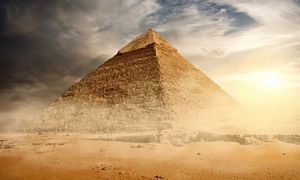
For the ancient Egyptians, death was never considered the end of life. It was only the beginning of another journey — a dangerous, mysterious, and deeply spiritual journey into the afterlife. This belief shaped nearly every part of Egyptian civilization: their pyramids, tombs, burial rituals, religious texts, and even the objects they placed beside the dead.
To modern people, it may seem strange that Egyptians buried kings and nobles with jewelry, furniture, food, weapons, and treasures. After all, what use could gold or clothing possibly have after death? But for the Egyptians, these grave goods were not symbols of luxury alone. They were necessities for survival in the next world.
Their entire culture revolved around one powerful idea: life continues after death.
Why Egyptians Buried People With Treasures
Ancient Egyptians believed the soul continued to live after the body died. The dead person would need food, protection, tools, servants, clothing, and wealth in the next world just as they did on Earth.
This is why tombs were filled with objects such as:
- Gold jewelry
- Food and wine
- Beds and chairs
- Weapons and tools
- Cosmetics and perfumes
- Statues and amulets
- Chariots and even boats
Pharaohs were buried with unimaginable riches because Egyptians believed rulers would continue their royal existence after death. Some tombs even included miniature servant statues called ushabtis, which were believed to magically work for the deceased in the afterlife.
The famous tomb of Tutankhamun contained thousands of treasures, including golden masks, jewelry, weapons, and ceremonial objects — all meant to assist him in eternity.
Ra: The Sun God and Divine King
One of the most important gods in Egyptian religion was Ra, the god of the sun.
Egyptians believed Ra traveled across the sky every day in a solar boat, bringing light to the world. At night, he journeyed through the underworld before rising again at dawn. Because the sun “died” every evening and returned every morning, Ra became a symbol of rebirth and eternal life.
Pharaohs were believed to be connected directly to Ra. After death, they hoped to join him in the heavens and live among the gods.
This is one reason pyramids were built on such a massive scale. They were not just giant tombs. They were spiritual machines designed to help the pharaoh rise toward the sky and unite with the sun god.
The True Purpose of the Pyramids
The pyramids still amaze the modern world, but for Egyptians, they served several sacred purposes.
Preserving the Body
Egyptians believed the soul needed a recognizable body to survive. If the body decayed, the soul could suffer or disappear forever.
This belief led to the practice of mummification. Bodies were carefully preserved using oils, salts, and wrapping techniques so they would remain intact for eternity.
Helping the Soul Reach Heaven
Pyramids also acted as gateways between Earth and the divine world. Their pointed shape symbolized rays of sunlight reaching toward the heavens.
Everything inside the pyramid — chambers, passages, prayers, and treasures — was designed to guide the dead ruler safely into the afterlife.
Bringing the Pharaoh Closer to Ra
The towering height of pyramids symbolically connected the king to the sun. Egyptians believed the deceased pharaoh would climb spiritually toward the heavens and join Ra among the gods.
In religious terms, the pyramid was not merely architecture. It was part of the pharaoh’s transformation into a divine being.
The Egyptian Soul Was Not One Single Thing
Unlike many modern religions, Egyptians did not believe the soul was one simple, unified spirit. Instead, they believed humans were made up of several spiritual parts.
The three most important were the Ka, Ba, and Akh.
The Ka — The Life Force
The Ka was the spiritual energy or life force inside every person.
Egyptians believed the creator god Khnum shaped human bodies from clay, and the Ka entered the body at birth to give it life.
Even after death, the Ka still needed nourishment. That is why families left food offerings at tombs.
Paintings of bread, meat, fruit, and beer were often placed on tomb walls because Egyptians believed the Ka could magically absorb their spiritual essence. Some priests even performed rituals asking the gods to provide eternal food for the deceased.
The Ka usually stayed close to the tomb. Small statues were placed there in case the body became damaged, giving the Ka another form to inhabit.
The Ba — The Personality and Spirit
The Ba represented a person’s personality, emotions, and individuality.
It was often shown as a bird with a human head.
Unlike the Ka, the Ba could travel freely between the world of the living and the world of the dead. During the day, it could leave the tomb and move about.
But this freedom came with danger. Egyptians believed that if the Ba became lost or damaged, it might never return to the body, leaving the soul incomplete forever.
The Akh — The Eternal Spirit
The Akh is the most mysterious part of the Egyptian soul.
Many scholars believe it represented the fully transformed spirit that could live eternally among the gods after judgment.
Some Egyptians believed the Akh formed when the Ka and Ba reunited successfully after death.
This was considered the highest spiritual state a person could achieve.
The Dangerous Journey Through the Underworld
After death, the soul entered the underworld, known as the Duat.
This was not a peaceful place. It was filled with monsters, demons, gates, rivers, and supernatural dangers.
To survive this terrifying journey, Egyptians buried the dead with magical texts, the most famous being the Book of the Dead. Despite its modern name, it was not a single book. It was a collection of spells, prayers, passwords, and instructions meant to guide the soul safely through the underworld.
The texts told the dead:
- Which paths to follow
- Which demons to avoid
- Which words to speak
- How to pass divine tests
- How to convince the gods of their innocence
Without this knowledge, the soul could become trapped forever.
Anubis and the Judgment of the Dead
The jackal-headed god Anubis guided souls through the underworld.
Anubis protected the dead and brought them to the Hall of Truth, where the final judgment took place.
This judgment was one of the most important beliefs in Egyptian religion.
The Weighing of the Heart
In the Hall of Truth, the dead stood before Osiris, ruler of the dead.
Their heart was placed on one side of a scale.
On the other side rested the feather of Ma’at, the goddess of truth, balance, and justice.
The heart represented everything a person had done in life.
If the heart was lighter than or equal to the feather, the person was considered honest and righteous.
But if the heart was heavy with cruelty, lies, or wrongdoing, the soul failed.
Ammit: The Devourer of Souls
Those who failed judgment faced a terrifying fate.
Their heart was fed to Ammit, a monstrous creature with the head of a crocodile, the body of a lion, and the hindquarters of a hippopotamus.
Ammit did not torture souls forever.
Instead, she erased them completely.
For Egyptians, this was the greatest punishment imaginable — not eternal fire, but total nonexistence.
To cease existing forever was more horrifying than suffering.
The 42 Judges
Passing the weighing test was not enough.
The soul then faced 42 divine judges, each responsible for a different sin.
The dead person had to declare their innocence before each god, saying things like:
- “I have not stolen.”
- “I have not lied.”
- “I have not harmed others.”
The Book of the Dead even listed the names of these gods and the sins they judged, helping souls prepare for this spiritual trial.
If the judges were satisfied, the soul could finally enter paradise.
Aaru: The Egyptian Paradise
The Egyptian paradise was called Aaru, or the Field of Reeds.
Unlike many modern ideas of heaven, Aaru was not a completely different world. It looked very similar to Egypt itself — only perfect.
There were green fields, flowing rivers, beautiful homes, loved ones, animals, and endless peace.
People could continue enjoying life forever, but without sickness, suffering, hunger, or death.
For Egyptians, paradise was not about escaping life. It was about finally living the ideal version of it.
The End of the Universe
One fascinating Egyptian belief was that even the universe itself would not last forever.
At the end of time, creation would collapse back into the great Primordial Sea — the endless waters that existed before the world began.
The souls who survived judgment would return to these sacred waters until a new universe was born again.
This idea shows how Egyptians viewed existence as a cycle of creation, destruction, and rebirth.
Tombs and Mummies
Today, ancient Egypt is often remembered for pyramids, mummies, and treasure-filled tombs. But behind those monuments was a civilization deeply obsessed with one question:
What happens after death?
To the Egyptians, life on Earth was only one chapter in a much longer journey. Death was not an ending to fear — it was a transition to prepare for carefully.
That is why they preserved bodies, built pyramids, wrote magical texts, honored gods, and filled tombs with treasures.
They believed eternity depended on it.