May 29, 2026
When people think about honey bees, they usually imagine hardworking worker bees collecting nectar from flowers or a queen bee ruling the hive. But inside every healthy bee colony lives another important member that often gets ignored — the drone bee.
Drones are the male honey bees of the colony, and their lives are very different from the females around them. They do not collect nectar, build honeycombs, protect the hive, or make honey. In fact, a drone has only one major purpose in life: to mate with a queen bee and help continue the survival of the species.
Even though their role seems simple, the life of a drone bee is one of the most fascinating stories in nature.
What Makes a Drone Bee Different?
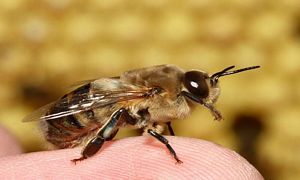
A drone bee looks very different from worker bees. It has a thicker body, a rounded abdomen, and enormous eyes that nearly cover its head. These oversized eyes help drones spot a queen during flight, which is essential for mating.
Unlike female worker bees, drones do not have stingers. They are unable to defend themselves and depend entirely on worker bees for food and care. If a drone is removed from the hive and left alone, it usually cannot survive for long.
Drones are also genetically unique. Worker bees and queen bees are born from fertilized eggs and carry genes from both parents. Drones, however, hatch from unfertilized eggs laid by the queen. This means a drone only has a mother and no father.
Because of this unusual reproductive system, drones carry only one set of chromosomes instead of two. Scientists call this a “haploid” genetic structure. It’s one of the reasons honey bees are so scientifically fascinating.
The Drone’s Only Mission
The entire life of a drone revolves around one goal — finding and mating with a virgin queen bee during her mating flight.
As drones mature, they begin flying out of the hive during warm afternoons. They travel to special locations in the sky called drone congregation areas. These are open spaces where thousands of drones from many colonies gather and wait for virgin queens to arrive.
No one fully understands how bees choose these gathering spots, but the same locations are often used year after year.
When a queen enters the area, the calm gathering instantly turns into a high-speed chase. Hundreds of drones race after her in mid-air, all trying to mate first.
Only a tiny number succeed.
A Mating Flight That Ends in Death
The mating process of honey bees is both remarkable and tragic.
If a drone successfully mates with the queen during flight, the act is so physically intense that it kills him almost immediately afterward. Part of his reproductive organ remains attached to the queen, and the drone falls to the ground and dies shortly later.
This means every drone gets only one chance in life to fulfill his purpose.
Meanwhile, the queen mates with several drones during one or multiple mating flights. She stores millions of sperm cells inside her body and uses them for the rest of her life to lay eggs.
This process ensures strong genetic diversity within the colony.
Life Inside the Hive
Although drones spend much of their adult lives preparing for mating flights, they begin life just like other bees — inside the hive.
Worker bees raise drone larvae in larger honeycomb cells designed specifically for males. The developing drones are constantly fed and cared for until they emerge as adults.
But unlike worker bees, drones do not contribute to hive labor. They do not clean cells, feed larvae, guard entrances, or gather food.
Instead, worker bees feed them directly.
During seasons when flowers are abundant, colonies may support hundreds or even thousands of drones because mating opportunities are high. But when food becomes scarce, especially in autumn, the colony’s attitude changes dramatically.
The Harsh Fate of Drones
As winter approaches, worker bees stop tolerating drones.
Since drones consume honey without helping gather resources, they become a burden during cold months when survival depends on conserving food.
Worker bees begin forcing drones out of the hive. Some are dragged to the entrance and pushed outside. Others are denied food until they weaken.
Without shelter or nourishment, the drones die from starvation or cold exposure.
It may seem cruel, but for honey bees, survival of the colony always comes first.
Why Drones Matter More Than People Think
Because drones do not make honey or perform hive work, many people assume they are useless. But without drones, bee populations would collapse.
Their role in reproduction is critical for maintaining healthy colonies and preserving genetic diversity among bees.
A queen that mates with many unrelated drones produces stronger worker bees with better disease resistance, improved productivity, and healthier colonies overall.
Beekeepers also carefully breed selected drones to improve future generations of honey bees. In modern beekeeping, some queens are even artificially inseminated using drones from carefully chosen colonies to strengthen desired traits.
Drones and Hive Temperature
Interestingly, drones may contribute to the hive in smaller ways too.
Like worker bees, drones can help regulate hive temperature. Bees generate heat by vibrating their muscles and cool the hive by fanning their wings. Although drones are not active workers, they still participate in maintaining the colony’s environment when needed.
Some researchers also believe the presence of drones may play a role in the colony’s social balance.
A Life Built Around Sacrifice
The life of a drone bee is short and uncertain.
Most drones never mate. Many die before ever finding a queen. Even successful drones sacrifice their lives during reproduction.
In many ways, drones remind us that nature assigns different roles to different members of a community. While worker bees build and protect the hive, and queens produce the next generation, drones ensure the continuation of the species itself.
Without them, the incredible world of honey bees could not survive.
The next time you watch bees moving around flowers on a sunny afternoon, remember that somewhere above the fields, drone bees may be flying through the sky on the most important mission of their lives.