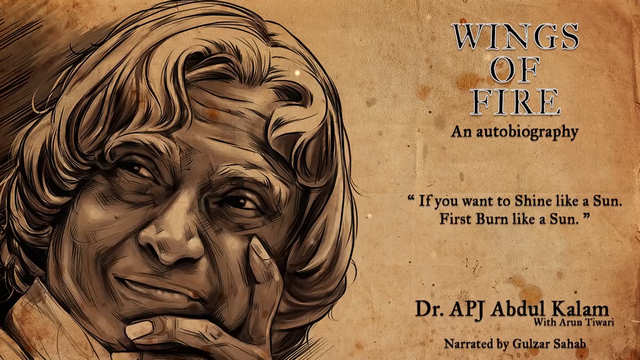
Wings of Fire, the autobiography of Dr. A.P.J. Abdul Kalam, remains one of the most influential books in modern Indian literature. Co-authored with Arun Tiwari, the book traces Kalam’s journey from his humble beginnings in Rameswaram to his role as India’s “Missile Man” and later President. More than a personal memoir, it is a narrative of resilience, vision, and the transformative power of science and education. This review explores the depth of Kalam’s story, its psychological impact, and its relevance in the Indian context.
Early Life and Humble Beginnings
The book opens with vivid descriptions of Kalam’s childhood in Rameswaram, Tamil Nadu. Born into a modest family, Kalam’s upbringing was marked by simplicity, discipline, and strong values. His father, a boat owner, and his mother, a homemaker, instilled in him the importance of honesty, hard work, and faith. These early influences shaped his character and laid the foundation for his lifelong pursuit of knowledge.
Education and the Power of Mentorship
Kalam’s academic journey, as narrated in Wings of Fire, highlights the crucial role of teachers and mentors. From his school days to his studies at the Madras Institute of Technology, he encountered educators who recognized his potential and guided him toward excellence. The book emphasizes how mentorship can transform lives, a lesson particularly relevant in India, where access to quality education remains a challenge for many.
Scientific Pursuits and National Service
A central theme of Wings of Fire is Kalam’s contribution to India’s defense and space programs. His work at the Indian Space Research Organisation (ISRO) and the Defence Research and Development Organisation (DRDO) is detailed with precision. The book recounts milestones such as the development of the SLV-III and the Integrated Guided Missile Development Program. These achievements not only advanced India’s technological capabilities but also symbolized the nation’s determination to achieve self-reliance.
Resilience in the Face of Challenges
Kalam’s journey was not without setbacks. Wings of Fire candidly describes the failures and disappointments he faced, including unsuccessful launches and bureaucratic hurdles. Yet, his resilience and optimism turned these challenges into stepping stones. The book underscores the importance of perseverance, reminding readers that success often emerges from the ashes of failure.
Vision for India’s Youth
Beyond recounting personal achievements, Wings of Fire serves as a motivational guide for India’s younger generations. Kalam repeatedly emphasizes the role of youth in shaping the nation’s future. His belief that dreams, when combined with hard work and determination, can transform reality, resonates throughout the book. This vision continues to inspire students, educators, and professionals across India.
Psychological Insights and Human Values
The autobiography also offers insights into child psychology and human development. Kalam’s reflections on his upbringing highlight how parental influence, cultural values, and early education shape personality and resilience. His life story illustrates the psychological importance of nurturing curiosity, discipline, and empathy in children—qualities that later define leadership and innovation.
Literary Style and Accessibility
Written in simple, engaging language, Wings of Fire is accessible to readers across age groups. The narrative blends technical details with personal anecdotes, making complex scientific achievements relatable. The book’s style reflects Kalam’s humility and clarity, ensuring that his message reaches a broad audience.
Relevance in Contemporary India
Even decades after its publication, Wings of Fire remains relevant in India’s socio-political and educational landscape. As the nation continues to invest in science, technology, and innovation, Kalam’s autobiography serves as a reminder of the importance of vision, integrity, and national service. It is not merely a book but a roadmap for aspiring leaders and dreamers.
Conclusion
Wings of Fire is more than an autobiography—it is a testament to the power of dreams, resilience, and dedication. Dr. A.P.J. Abdul Kalam’s journey from a small town in Tamil Nadu to the highest office in India exemplifies how determination and vision can overcome adversity. The book continues to inspire millions, reinforcing the idea that every child, regardless of background, has the potential to soar.