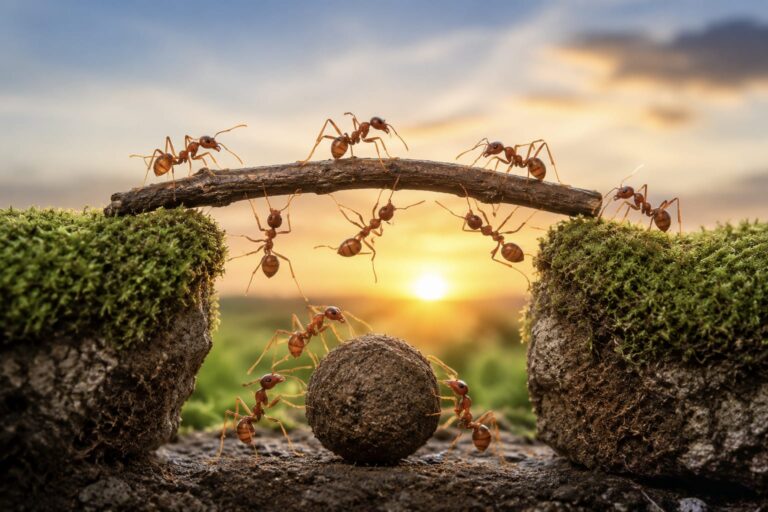
Nature surrounds us every day, yet much of its beauty and complexity often goes unnoticed. From the rustling of leaves in the wind to the songs of birds at dawn, nature is constantly communicating. Although it does not use words like humans do, it has its own unique language—a language expressed through sounds, colors, movements, scents, and patterns. This silent communication system connects every living thing on Earth and helps maintain the delicate balance of life.
Nature Speaks Through Sound
One of the most recognizable forms of communication in nature is sound. Birds sing to attract mates, defend territories, and warn others of danger. Each species has its own unique calls and songs that carry specific meanings.
Animals also use sound to communicate over long distances. Wolves howl to locate members of their pack, while whales produce complex songs that travel through vast oceans. Even insects contribute to nature’s orchestra. Crickets chirp to attract mates, and bees buzz as they move from flower to flower collecting nectar.
The sounds of nature are not random. They are messages that help living creatures survive and interact with one another. For those who listen carefully, forests, oceans, and grasslands are filled with conversations taking place every moment.
The Language of Colors
Colors play an important role in nature’s communication system. Bright flowers use vibrant colors to attract pollinators such as bees, butterflies, and birds. These colors act like signs that guide pollinators toward nectar and pollen.
Animals also use color to send messages. Some species display bright colors to attract mates, while others use warning colors to signal danger. For example, certain frogs and insects have vivid patterns that warn predators they may be poisonous.
Seasonal color changes also communicate important information. The golden leaves of autumn signal changing weather conditions, while fresh green leaves in spring announce a season of growth and renewal.
Nature’s colors are not merely decorative—they are meaningful signals that help maintain ecosystems.
Trees and Plants Communicate
Many people assume that plants are passive organisms, but scientific research has revealed that plants communicate in remarkable ways. Trees and plants can send chemical signals through the air and underground networks.
When a tree is attacked by insects, it may release chemicals that warn nearby trees of the danger. In response, neighboring trees can increase their natural defenses before the insects reach them.
Underground fungal networks, often called the “Wood Wide Web,” connect trees and allow them to exchange nutrients and information. Through these networks, older trees may support younger ones by sharing resources.
This hidden communication system demonstrates that forests are not simply collections of individual trees but interconnected communities working together.
Animal Body Language
Animals often communicate through body movements and behavior. A dog’s wagging tail, a cat’s arched back, or a deer’s alert posture all convey messages.
Birds perform elaborate dances during courtship rituals. Peacocks spread their magnificent feathers to attract mates, while many species use specific movements to express dominance or submission.
Even small creatures rely on body language. Ants communicate using touch and movement, creating highly organized colonies that function with remarkable efficiency.
These nonverbal signals help animals cooperate, avoid conflict, and strengthen social bonds.
Nature’s Weather Signals
Nature also communicates changes in weather and environmental conditions. Long before modern forecasting technology existed, people observed natural signs to predict weather patterns.
Birds often fly lower before storms because of changes in air pressure. Certain flowers close their petals before rain. Ants may build higher mounds when heavy rainfall is approaching.
The sky itself provides signals through cloud formations, wind patterns, and atmospheric changes. By paying attention to these clues, humans have learned to interpret many of nature’s weather messages.
Although modern science has improved forecasting accuracy, natural indicators remain valuable reminders of the close relationship between living organisms and their environment.
The Rhythm of Seasons
The changing seasons represent another form of nature’s communication. Spring signals growth and renewal, summer brings abundance, autumn prepares the world for rest, and winter encourages survival and conservation.
Animals respond to these seasonal messages through migration, hibernation, and breeding cycles. Plants adjust their growth patterns according to temperature, sunlight, and rainfall.
These rhythms create a predictable cycle that supports life across the planet. They remind us that change is a natural and necessary part of existence.
Lessons Hidden in Nature
Beyond practical communication, nature also offers valuable life lessons. Rivers teach persistence by finding paths around obstacles. Trees demonstrate patience as they grow slowly over many years. Mountains symbolize strength and endurance.
Nature shows the importance of balance. Every species plays a role in maintaining healthy ecosystems. Predators and prey, plants and pollinators, forests and rainfall all depend on one another.
These lessons encourage humans to value cooperation, resilience, and sustainability in their own lives.
Human Connection with Nature
Despite living in an increasingly technological world, humans remain deeply connected to nature. Spending time outdoors can reduce stress, improve mental well-being, and increase creativity.
When people observe birds, walk through forests, or listen to ocean waves, they reconnect with the natural world. These experiences help us appreciate the intricate communication systems that support life on Earth.
Understanding nature’s language can also inspire greater environmental responsibility. The more we understand the interconnectedness of life, the more motivated we become to protect it.
Protecting Nature’s Voice
Human activities such as deforestation, pollution, and climate change threaten many natural communication systems. Habitat destruction can disrupt migration routes, reduce biodiversity, and weaken ecosystems.
Protecting forests, oceans, rivers, and wildlife helps preserve the natural language that has evolved over millions of years. Conservation efforts ensure that future generations can continue to experience and learn from nature’s wisdom.
Every action, no matter how small, can contribute to safeguarding the environment and maintaining the balance of life.
Conclusion
The secret language of nature is all around us. It speaks through birdsong, colorful flowers, changing seasons, animal behaviors, and the hidden networks connecting forests. Although this language does not rely on words, it communicates powerful messages about survival, cooperation, adaptation, and harmony.By learning to observe and understand nature’s signals, we gain a deeper appreciation for the world we inhabit. Nature reminds us that every living thing is connected and that balance is essential for life to thrive. In a fast-paced modern world, listening to nature’s silent voice may be one of the most valuable lessons we can learn.