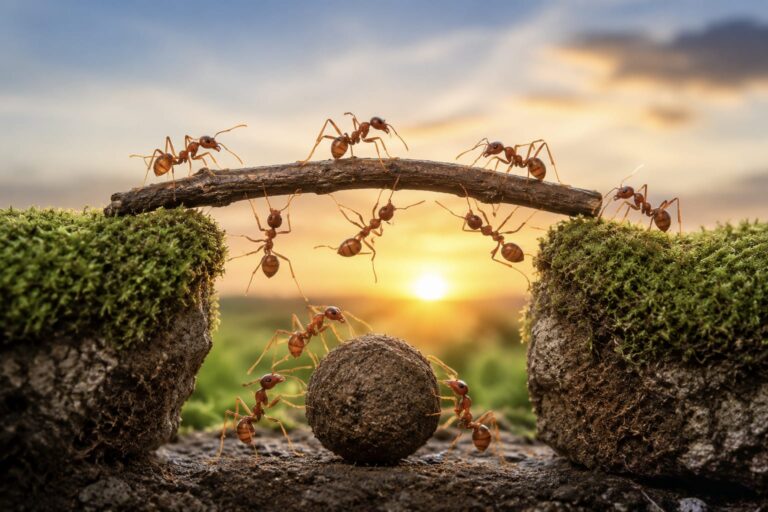
In the natural world, some of the most important lessons come from the smallest creatures. Among these tiny teachers, ants stand out as remarkable examples of teamwork, discipline, and perseverance. Though each ant is small and seemingly insignificant on its own, together they form powerful colonies capable of accomplishing extraordinary tasks.
Ants have existed on Earth for millions of years and have adapted to a wide range of environments. Their success is largely due to their ability to work together toward common goals. The story of ants is not just about survival; it is a story of cooperation, organization, and collective strength. By observing ants, humans can learn valuable lessons about teamwork and the importance of working together.
The World of Ants
Ants live in highly organized colonies that function like miniature societies. Each colony consists of different groups of ants, each with specific responsibilities. There is a queen ant whose primary role is to lay eggs, worker ants that gather food and care for the young, and soldier ants that protect the colony from threats.
Every ant understands its role and performs its duties without complaint. There is no confusion or competition over responsibilities. This level of organization allows the colony to operate smoothly and efficiently.
Unlike humans, ants do not seek personal recognition. Their focus is always on the success and well-being of the entire colony.
Strength in Unity
One of the most impressive qualities of ants is their ability to achieve tasks together that would be impossible individually. A single ant may struggle to move a large object, but a group of ants can carry items many times their combined weight.
When food is discovered, ants work together to transport it back to the nest. They coordinate their efforts, adjust their movements, and support one another until the task is completed.
This demonstrates an important lesson: teamwork can transform small individual efforts into significant achievements. When people combine their strengths and talents, they can accomplish goals that seem impossible alone.
Communication: The Key to Success
Effective teamwork requires communication, and ants have developed a remarkable communication system. They use chemical signals called pheromones to share information with one another.
When an ant finds food, it leaves a pheromone trail that guides other ants to the source. As more ants follow the trail, it becomes stronger and easier to follow. This simple but effective system allows colonies to locate resources quickly and efficiently.
The success of ant colonies highlights the importance of clear communication in any team. Whether in schools, workplaces, or communities, sharing information helps people coordinate efforts and achieve common objectives.
Division of Labor
Another reason ants are so successful is their division of labor. Every ant has a specific role that contributes to the colony’s overall success.
Worker ants gather food, build nests, and care for young ants. Soldier ants defend the colony. The queen focuses on reproduction. Because each ant specializes in a particular task, the colony operates efficiently.
Human organizations also benefit from division of labor. Teams function best when members understand their responsibilities and contribute according to their strengths. Cooperation and specialization allow groups to achieve greater productivity and effectiveness.
Persistence and Hard Work
Ants are known for their incredible work ethic. They spend much of their lives searching for food, building tunnels, and maintaining their nests. Even when obstacles arise, ants rarely give up.
If an object blocks their path, they find another route. If food is lost, they continue searching. Their determination enables them to overcome challenges and ensure the survival of their colony.
This persistence serves as an inspiring example for humans. Success often requires patience, effort, and the willingness to continue despite difficulties.
Helping One Another
Ants demonstrate a strong sense of cooperation and mutual support. When one ant encounters difficulty, others often assist. They share food, protect one another, and work together to solve problems.
This cooperative behavior strengthens the entire colony. By helping each other, ants increase their chances of survival and success.
In human society, teamwork flourishes when individuals support one another. Collaboration, empathy, and mutual respect create stronger relationships and more successful communities.
Preparing for the Future
Ants are excellent planners. During favorable conditions, they collect and store food for times when resources may become scarce. This preparation helps colonies survive difficult seasons.
Their ability to think ahead teaches an important lesson about planning and responsibility. Successful teams and individuals often prepare for future challenges rather than waiting until problems arise.
Whether saving resources, developing skills, or creating strategies, preparation contributes to long-term success.
Lessons for Students and Professionals
The story of ants offers valuable lessons for people of all ages:
- Teamwork is stronger than individual effort.
- Communication improves cooperation.
- Hard work leads to achievement.
- Persistence helps overcome obstacles.
- Helping others benefits the entire group.
- Planning ahead increases success.
- Every role is important in achieving a common goal.
Students can apply these lessons in group projects, sports teams, and classroom activities. Professionals can use them to improve workplace collaboration and productivity.
Ants as Nature’s Teachers
Despite their tiny size, ants demonstrate qualities that many humans admire. They work diligently, communicate effectively, support one another, and remain committed to their goals.
Nature often teaches profound lessons through simple examples. Ants remind us that greatness is not determined by size or individual power but by cooperation, dedication, and unity.
Their success story proves that when individuals work together toward a common purpose, extraordinary achievements become possible.
Conclusion
The story of ants is a powerful reminder of the importance of teamwork. Through cooperation, communication, hard work, and mutual support, these tiny insects accomplish remarkable tasks that far exceed the abilities of any single ant.
In a world where success often depends on collaboration, ants offer timeless lessons that remain relevant to schools, workplaces, families, and communities. Their example teaches us that true strength lies not in standing alone but in working together. Like ants, we can achieve great things when we unite our efforts, share our strengths, and support one another in pursuit of common goals.
The power of teamwork is clearly visible in the ant’s story—a story that continues to inspire and educate people around the world.