June 3,2026
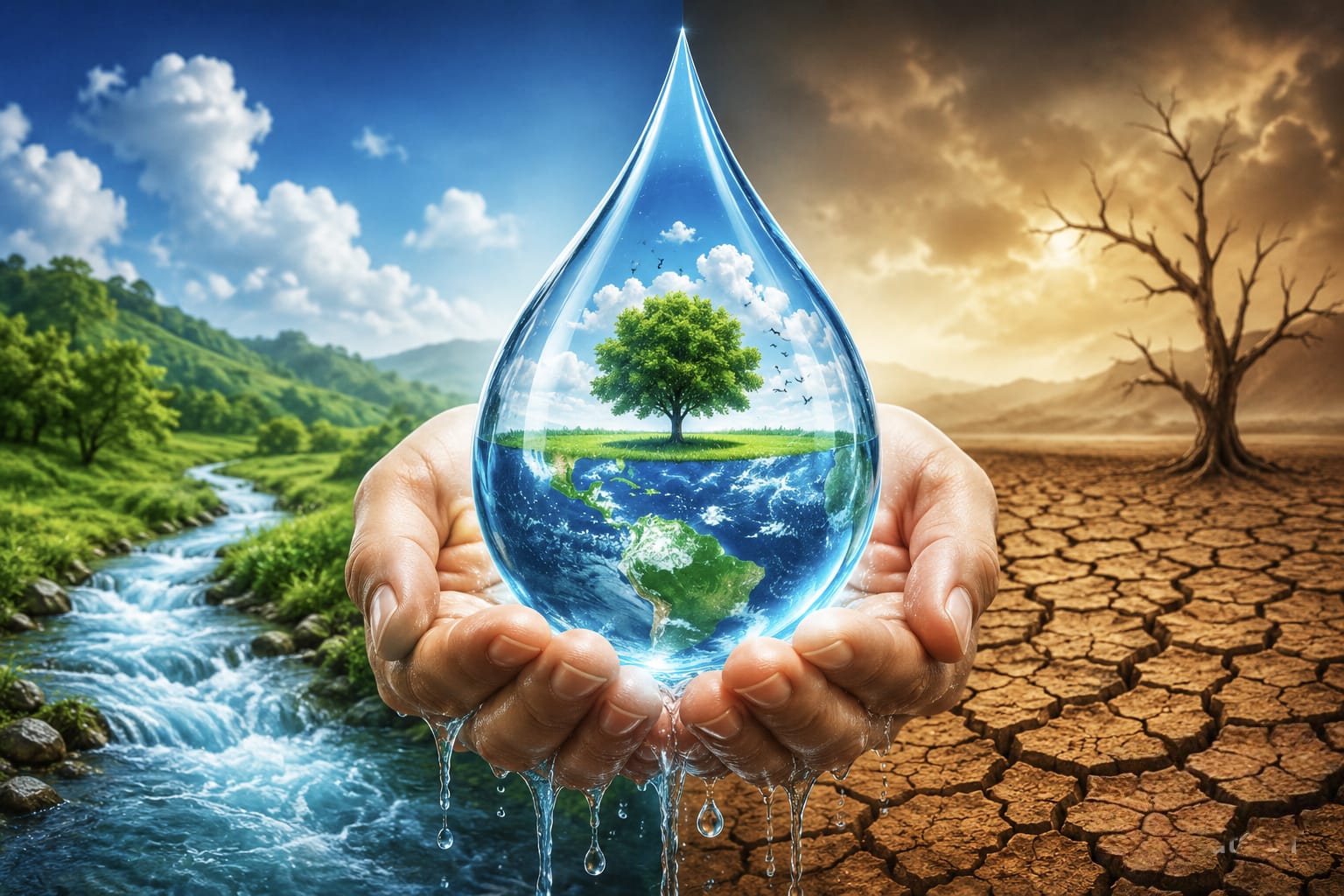
Water is one of the most valuable natural resources on Earth. It is essential for the survival of all living organisms, including humans, animals, and plants. Despite the fact that nearly 71% of the Earth’s surface is covered with water, only a small percentage is available as fresh water suitable for drinking, agriculture, and daily use. With increasing population growth, urbanization, industrial development, and climate change, the demand for water is rising rapidly. As a result, water scarcity has become a serious global issue. Water conservation is no longer an option but a necessity for ensuring a sustainable future.
Water conservation refers to the careful management and efficient use of water resources to reduce waste and preserve supplies for future generations. Every drop of water saved today contributes to the well-being of society tomorrow. Understanding the importance of water conservation is crucial for protecting both the environment and human life.
Understanding Water Scarcity
Many people assume that water is an unlimited resource because oceans, rivers, and lakes are visible everywhere. However, the majority of Earth’s water is salty and unsuitable for drinking. Freshwater resources account for only a small fraction of the total water available on the planet.
Several factors contribute to water scarcity:
- Rapid population growth increases water demand.
- Industrial activities consume large quantities of water.
- Agricultural practices often waste water through inefficient irrigation.
- Pollution contaminates freshwater sources.
- Climate change causes irregular rainfall patterns and prolonged droughts.
Millions of people around the world already face water shortages. If current trends continue, future generations may struggle to access clean and safe water.
Why Water Conservation Matters
- Ensures Availability for Future Generations
Water is a finite resource. Conserving water today ensures that future generations will have access to sufficient supplies for drinking, sanitation, and agriculture. Responsible use of water helps create a sustainable future where everyone can meet their basic needs.
- Protects the Environment
Natural ecosystems such as rivers, wetlands, lakes, and forests depend on adequate water supplies. Excessive water consumption can reduce water levels, harm wildlife habitats, and disturb ecological balance. Conserving water helps maintain healthy ecosystems and supports biodiversity.
- Saves Energy
Water treatment and distribution require significant amounts of energy. Pumping, filtering, heating, and transporting water consume electricity and fuel. When water is conserved, less energy is needed, leading to reduced greenhouse gas emissions and lower environmental impact.
- Reduces Water Bills
Efficient water use helps households and businesses save money. Fixing leaks, using water-efficient appliances, and avoiding unnecessary water usage can significantly reduce utility expenses over time.
- Supports Agriculture and Food Security
Agriculture is one of the largest consumers of freshwater worldwide. Conserving water ensures that farmers have adequate resources to grow crops and produce food. Efficient irrigation methods can improve agricultural productivity while reducing water waste.
Practical Ways to Conserve Water
Water conservation begins with simple habits that can make a significant difference.
At Home
Turn off taps when not in use.
Repair leaking faucets and pipes immediately.
Use water-efficient showerheads and toilets.
Take shorter showers.
Run washing machines and dishwashers only with full loads.
Collect rainwater for gardening and cleaning purposes.
Reuse water whenever possible.
In Agriculture
Adopt drip irrigation systems.
Water crops during cooler hours to reduce evaporation.
Use drought-resistant crops.
Improve soil management to retain moisture.
In Industries
Recycle and reuse water in production processes.
Install water-efficient technologies.
Treat wastewater before releasing it into the environment.
Conduct regular audits to identify water-saving opportunities.
In Communities
Promote public awareness campaigns.
Encourage rainwater harvesting projects.
Protect local water bodies from pollution.
Support government policies focused on water conservation.
The Role of Technology in Water Conservation
Modern technology offers innovative solutions for managing water resources more efficiently.
Smart Irrigation Systems
These systems use sensors and weather data to determine the exact amount of water needed by crops, reducing waste and improving efficiency.
Water Recycling Technologies
Advanced treatment methods allow wastewater to be purified and reused for industrial, agricultural, and even domestic purposes.
Leak Detection Systems
Smart sensors can identify leaks in pipelines quickly, preventing large-scale water loss.
Rainwater Harvesting Systems
These systems collect and store rainwater for future use, reducing dependence on groundwater and municipal supplies.
Technology can play a major role in addressing global water challenges when combined with responsible human behavior.
Water Conservation and Climate Change
Climate change is increasing pressure on global water resources. Rising temperatures lead to greater evaporation rates, while changing weather patterns cause floods in some regions and droughts in others. Conserving water helps communities become more resilient to climate-related challenges.
By reducing water consumption and protecting natural water systems, societies can better adapt to changing environmental conditions. Sustainable water management is therefore an important component of climate change mitigation and adaptation strategies.
The Responsibility of Individuals
Governments, industries, and organizations play important roles in water conservation, but individual actions are equally significant. Every person can contribute by adopting water-saving habits and encouraging others to do the same.
Educating children about the value of water helps create a culture of conservation from an early age. Schools, families, and communities should work together to promote awareness and responsible water use.
Small actions, when multiplied across millions of people, can lead to substantial positive impacts. Conserving water is a shared responsibility that requires cooperation from everyone.
Conclusion
Water is the foundation of life, yet it is increasingly threatened by overuse, pollution, and climate change. Conserving water is essential for protecting the environment, supporting economic development, ensuring food security, and safeguarding future generations. Every drop saved contributes to a healthier and more sustainable world.
The importance of water conservation cannot be overstated. By adopting efficient practices at home, in agriculture, and in industry, society can reduce waste and preserve this precious resource. Water conservation is not merely an environmental concern; it is a commitment to the well-being of humanity and the planet. As the saying goes, “Save Water Today, Secure Tomorrow.”