For decades, society measured intelligence in a narrow way. People who solved mathematical equations quickly, scored highly on examinations, or displayed strong language skills were often labeled “smart,” while others with different talents were overlooked. Traditional intelligence testing mainly focused on logical reasoning, memory, language comprehension, and analytical thinking. Although these abilities are important, they do not fully represent the vast potential of the human mind.
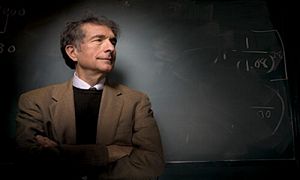
In 1983, American psychologist and professor Howard Gardner introduced a groundbreaking idea that challenged conventional thinking about intelligence. Through his theory of Multiple Intelligences, Gardner argued that intelligence is not a single fixed ability measured only through IQ tests. Instead, he believed human intelligence is made up of several different forms of ability, each equally valuable in its own way.
His theory transformed educational psychology and changed the conversation around talent, creativity, learning, and human potential. According to Gardner, every person possesses unique intellectual strengths, and intelligence can appear in many forms beyond academics.
The Shift Away From Traditional Intelligence
For many years, intelligence was associated primarily with IQ scores. Schools often rewarded students who excelled in mathematics, reading, writing, and memorization. However, Gardner believed this approach ignored many naturally gifted individuals whose talents could not be measured through standardized testing.
A musician who can identify rhythm instantly, an athlete with exceptional body coordination, a counselor who understands emotions deeply, or an artist capable of visualizing complex structures may all possess remarkable intelligence, even if they do not achieve high scores in traditional academic settings.
Gardner defined intelligence as:
“The ability to solve problems or create products that are valued within one or more cultural settings.”
This definition widened the understanding of human capability. It suggested that intelligence is practical, creative, emotional, social, and deeply connected to real-life experiences.
The Nine Types of Intelligence
Gardner originally introduced seven intelligences, later expanding the theory to include nine different categories. Each intelligence represents a unique way people process information and interact with the world.
1. Logical-Mathematical Intelligence
Logical-mathematical intelligence is commonly associated with scientific and analytical thinking. People strong in this intelligence are skilled at recognizing patterns, solving problems, analyzing situations, and understanding abstract relationships.
They enjoy structure, logic, sequencing, and reasoning. These individuals are naturally curious and often ask deep questions about how things work.
Common Traits
- Strong problem-solving ability
- Enjoyment of mathematics and calculations
- Interest in experiments and investigations
- Love for puzzles and strategy games
- Ability to think conceptually and systematically
Typical Careers
People with strong logical intelligence often succeed as:
- Scientists
- Engineers
- Economists
- Accountants
- Data analysts
- Computer programmers
- Researchers
This intelligence is the one most traditional IQ tests focus on heavily.
2. Linguistic Intelligence
Linguistic intelligence refers to the ability to use language effectively. These individuals understand the power of words and can communicate ideas clearly through speaking or writing.
People with linguistic intelligence often enjoy storytelling, reading, debates, poetry, and persuasive communication. They possess strong vocabularies and understand how language can influence emotions and decisions.
Common Traits
- Strong writing and speaking skills
- Enjoyment of reading books and literature
- Talent for storytelling and persuasion
- Ability to learn languages easily
- Interest in word games and creative writing
Typical Careers
Individuals with linguistic intelligence may thrive as:
- Writers
- Journalists
- Lawyers
- Public speakers
- Teachers
- Broadcasters
- Politicians
- Content creators
Words become their primary tool for expression and influence.
3. Interpersonal Intelligence
Interpersonal intelligence involves understanding other people’s emotions, motivations, and behaviors. It is closely connected to emotional intelligence and social awareness.
These individuals can sense moods, communicate effectively, and build strong relationships. They often become natural leaders, counselors, or mediators.
Common Traits
- Ability to understand people easily
- Strong communication skills
- Sensitivity to emotions and body language
- Enjoyment of teamwork and collaboration
- Talent for resolving conflicts
Typical Careers
People with interpersonal intelligence often excel in:
- Counseling
- Human resources
- Teaching
- Social work
- Psychology
- Leadership roles
- Public relations
Their strength lies in connecting with others on a meaningful level.
4. Intrapersonal Intelligence
While interpersonal intelligence focuses on understanding others, intrapersonal intelligence is about understanding oneself.
People with this intelligence are highly self-aware. They recognize their emotions, motivations, strengths, and weaknesses. They value self-reflection and often seek personal growth and deeper meaning in life.
Common Traits
- Strong self-awareness
- Independent thinking
- Ability to reflect deeply
- Understanding personal emotions clearly
- High levels of self-motivation
Typical Careers
Individuals strong in intrapersonal intelligence may become:
- Therapists
- Philosophers
- Writers
- Theologians
- Entrepreneurs
- Coaches
Their internal understanding helps guide both their decisions and personal development.
5. Musical Intelligence
Musical intelligence involves sensitivity to rhythm, melody, pitch, tone, and sound patterns. People with this intelligence often hear details in music that others miss.
Music is not simply entertainment for them — it becomes a language through which they experience and express emotion.
Common Traits
- Strong sense of rhythm and melody
- Ability to recognize musical patterns
- Interest in composing or performing music
- Sensitivity to sound changes
- Ability to focus better with music
Typical Careers
Careers connected to musical intelligence include:
- Musicians
- Composers
- Conductors
- Music teachers
- Sound engineers
- Music therapists
Musical intelligence demonstrates that creativity itself is a form of intellectual ability.
6. Visual-Spatial Intelligence
Visual-spatial intelligence refers to the ability to imagine objects, spaces, and images mentally. These individuals think visually and can manipulate images in their minds.
Artists, architects, and designers often possess strong spatial intelligence because they can envision structures before they physically exist.
Common Traits
- Strong imagination
- Good sense of direction
- Ability to visualize objects in 3D
- Enjoyment of drawing and design
- Skill in understanding maps and layouts
Typical Careers
People with visual-spatial intelligence may succeed as:
- Architects
- Graphic designers
- Photographers
- Pilots
- Engineers
- Interior designers
- Urban planners
Their minds naturally process visual information creatively and efficiently.
7. Bodily-Kinaesthetic Intelligence
Bodily-kinaesthetic intelligence involves using the body skillfully and coordinating physical movement effectively. Athletes, dancers, actors, and craftspeople often possess this intelligence.
These individuals learn best through movement, physical interaction, and hands-on experiences.
Common Traits
- Excellent body coordination
- Strong sense of timing and movement
- Comfort with physical activity
- Ability to communicate through gestures
- Skill in handling tools or objects precisely
Typical Careers
Possible careers include:
- Athletes
- Dancers
- Physical therapists
- Actors
- Mechanics
- Fitness trainers
- Craftspeople
Gardner’s theory helped society recognize athletic and physical talent as genuine intelligence rather than simply physical ability.
8. Naturalist Intelligence
Naturalist intelligence refers to sensitivity toward nature, animals, plants, and environmental patterns. These individuals feel deeply connected to the natural world.
They can identify differences in species, understand ecosystems, and often enjoy spending time outdoors.
Common Traits
- Love for nature and wildlife
- Strong connection with animals
- Interest in environmental issues
- Ability to recognize natural patterns
- Enjoyment of outdoor activities
Typical Careers
People with naturalist intelligence may pursue careers such as:
- Botanists
- Environmental scientists
- Geologists
- Meteorologists
- Veterinarians
- Gardeners
- Conservationists
This intelligence highlights humanity’s deep relationship with the environment.
9. Existential Intelligence
Existential intelligence is perhaps the most philosophical of all the intelligences. It involves thinking deeply about life, existence, purpose, spirituality, and human meaning.
People with existential intelligence are drawn toward profound questions that many people avoid.
Common Traits
- Curiosity about life’s meaning
- Interest in philosophy and spirituality
- Deep reflection about existence
- Sensitivity to human suffering and purpose
- Desire to understand universal truths
Typical Careers
Careers associated with existential intelligence include:
- Philosophers
- Spiritual leaders
- Authors
- Motivational speakers
- Theologians
- Counselors
These individuals often seek wisdom rather than simple factual knowledge.
Why Gardner’s Theory Changed Education
Gardner’s theory transformed education because it challenged the belief that intelligence could be reduced to a single number.
Traditional classrooms often favor students who excel in memorization, writing, and mathematics. However, Gardner emphasized that students learn differently and possess different strengths.
A child struggling with algebra may possess extraordinary musical or interpersonal intelligence. Another student weak in writing may have remarkable artistic or spatial abilities.
This perspective encouraged educators to:
- Use diverse teaching methods
- Recognize creative talents
- Encourage practical learning
- Value emotional and social intelligence
- Support individualized education
Multiple Intelligences in Everyday Life
Gardner believed intelligences do not operate independently. They interact continuously.
For example:
- A dancer combines bodily-kinaesthetic and musical intelligence.
- A successful entrepreneur may use interpersonal, logical, and intrapersonal intelligence together.
- A filmmaker may blend visual-spatial, linguistic, and interpersonal intelligence.
Human intelligence is dynamic and interconnected rather than isolated into separate categories.
Criticism and Debate
Although Gardner’s theory became extremely influential, it also faced criticism from some psychologists.
Critics argue:
- Some intelligences resemble talents rather than measurable intelligence.
- The theory lacks strong scientific testing compared to IQ research.
- Traditional intelligence testing still predicts academic and occupational performance effectively.
Despite these criticisms, Gardner’s work remains highly respected because it broadened society’s understanding of human ability and inspired more inclusive educational practices.
Intelligence Is Not Fixed
One of the most powerful ideas behind Gardner’s theory is that intelligence can grow and develop.
People are not born limited to one fixed level of intelligence. Environment, education, practice, curiosity, and life experiences all shape cognitive growth.
A person can strengthen abilities by:
- Reading regularly
- Learning music
- Engaging in creative activities
- Exploring nature
- Practicing communication skills
- Reflecting deeply on personal experiences
This aligns with the modern concept of a growth mindset — the belief that abilities can improve through effort and learning.
Rethinking Human Potential
Howard Gardner’s theory reminds us that intelligence is far richer and more diverse than society once believed. Human beings are not defined by test scores alone.
Some people express intelligence through words.
Others through music.
Some through empathy.
Others through movement, creativity, or philosophical thought.
Every individual carries unique strengths that deserve recognition and development.
In a world increasingly focused on innovation, creativity, emotional understanding, and adaptability, Gardner’s theory continues to hold powerful relevance. It encourages schools, workplaces, and society itself to value human potential in all its diverse forms.
True intelligence is not simply about knowing the right answers.
It is about understanding ourselves, connecting with others, solving problems creatively, and contributing meaningfully to the world around us.