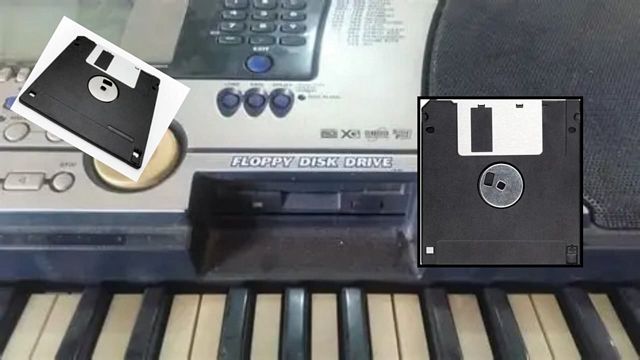
For decades, floppy discs were the lifeline of keyboardists, storing musical tones, rhythms, and compositions. Today, pen drives have replaced them, offering faster, larger, and more reliable storage. Yet, for many musicians, floppy discs remain a symbol of nostalgia, representing an era when technology and creativity merged in simpler but memorable ways.
The Era of Floppy Discs in Music
In the 1980s and 1990s, floppy discs were widely used in electronic keyboards to save custom tones, rhythm patterns, and song sequences. Popular brands like Yamaha and Roland integrated floppy drives into their instruments, allowing musicians to carry their work in a compact format. Despite their limited storage capacity—often just 1.44 MB—floppy discs were revolutionary, enabling portability and personalization in music production.
Keyboardists recall the excitement of inserting a disc, waiting for the instrument to load, and hearing their saved compositions come alive. This process, though slow by today’s standards, gave musicians a sense of ownership and creativity that defined the era
Limitations of Floppy Technology
While floppy discs were groundbreaking, they came with significant drawbacks. Their small storage capacity restricted the number of tones and files that could be saved. They were also prone to physical damage, magnetic interference, and data corruption. For professional musicians, losing a floppy disc often meant losing hours of creative work.
As technology advanced, these limitations became more apparent, paving the way for more efficient storage solutions.
The Rise of Pen Drives in Keyboards
By the early 2000s, pen drives began to replace floppy discs in musical instruments. Offering storage capacities ranging from 128 MB to several gigabytes, pen drives transformed the way keyboardists managed their music. Loading files became faster, and the risk of data loss was significantly reduced.
Modern keyboards now feature USB ports, allowing musicians to transfer files seamlessly between computers and instruments. Pen drives also support diverse file formats, making them versatile tools for professional performances and studio recordings.
Nostalgia and Emotional Connection
Despite the convenience of pen drives, many keyboardists remain emotionally attached to floppy discs. For them, floppy discs represent the formative years of digital music, when every saved tone felt like a personal achievement. The tactile experience of handling discs, labeling them, and organizing collections created a bond that pen drives, with their sleek and impersonal design, cannot replicate.
Musicians often describe floppy discs as more than storage devices—they were companions in their creative journey.
Comparing Floppy Discs and Pen Drives
The transition from floppy discs to pen drives highlights the evolution of technology in music. Floppy discs offered simplicity and nostalgia, while pen drives provide efficiency and reliability. Today’s musicians benefit from vast storage, faster access, and compatibility with modern systems. Yet, the charm of floppy discs continues to resonate, especially among those who began their careers in the analog-digital crossover era.
The Future of Storage in Music
As technology advances, cloud storage and wireless transfers are becoming the next frontier for musicians. With platforms allowing instant backup and sharing, the reliance on physical storage devices is gradually diminishing. However, the legacy of floppy discs remains a reminder of how far music technology has come—and how nostalgia continues to shape the identity of musicians.
Conclusion
Floppy discs may no longer be practical, but they remain etched in the memories of keyboardists who grew up with them. Pen drives symbolize progress, offering speed and reliability, yet they lack the sentimental value of their predecessors. The journey from floppy discs to pen drives reflects not only technological advancement but also the emotional connection musicians have with the tools that shaped their art.
.