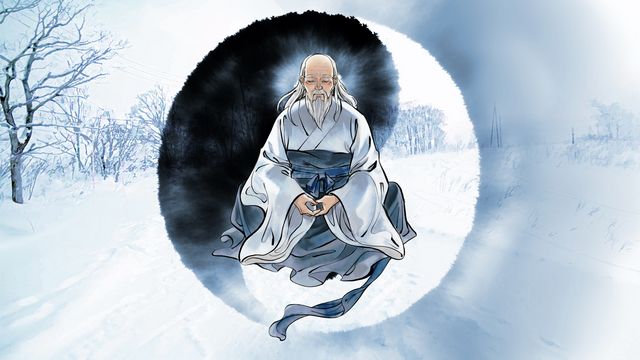
What if many of our struggles come not from reality itself, but from the stories we place on top of it?
That seems to be one of the quiet questions hidden within the opening chapters of the Tao Te Ching, the ancient text traditionally attributed to Lao Tzu. More than 2,500 years after it was written, people still return to it—not because it provides easy answers, but because it invites us to see life differently.
Seeing Through the Lens We Carry
Imagine two children encountering the same stray dog. One child immediately runs toward it, excited to play. The other freezes in fear. The dog has not changed. Yet each child experiences a completely different reality. Why?
Because neither child is seeing the dog alone. They are seeing it through the lens of their past experiences.
The Tao Te Ching begins with a similar insight. It suggests that what we call reality is often filtered through our desires, fears, memories, and expectations. We rarely see things exactly as they are. Instead, we see what our minds have prepared us to see.
Perhaps wisdom begins when we become aware of those filters.
The Problem with Dividing Everything
We tend to organize life into categories. Good and bad. Success and failure. Beautiful and ugly. Right and wrong.
Yet Lao Tzu points that these opposites depend on each other for their existence. How could we know beauty if ugliness had never existed? How would we understand success without failure?
The text isn’t claiming that all things are identical. Rather, it invites us to question whether reality is as divided as we assume.
Many conflicts begin when we become trapped inside rigid labels. Once we decide something is entirely good or entirely bad, we stop seeing the larger picture. The Taoist perspective encourages a softer view. Life is often more interconnected than our judgments suggest.
The Strange Power of Not Forcing Things
Modern culture celebrates effort. Push harder. Hustle more. Win at all costs.
The Tao Te Ching offers a surprisingly different perspective. It introduces the concept often translated as wu-wei—”non-forcing” or “effortless action.” This does not mean doing nothing.
A farmer still plants seeds. A musician still practices. A leader still leads. The difference is that action flows with circumstances rather than fighting them.
Think of water. Water never argues with gravity. It simply follows its nature. Yet over time it shapes mountains, carves canyons, and sustains entire ecosystems. Its power comes not from aggression, but from consistency.
Perhaps some of our exhaustion comes from trying to force what might unfold more naturally if we worked with life instead of against it.
Why Emptiness Is Useful
One of the ideas in these early chapters is the value of emptiness. A cup is useful because it is empty. A room is useful because of the space inside it. A wheel functions because of the hollow center around which it turns. In a world obsessed with accumulation, this is a radical thought.
We often assume more is always better: More knowledge. More possessions. More status. More achievements. Yet the Tao Te Ching asks whether usefulness often comes from what is absent rather than what is present. An overfilled schedule leaves no room for creativity. An overfilled mind leaves little room for insight. An overfilled ego leaves little room for growth.
Sometimes wisdom is less about adding and more about making space.
The Universe Doesn’t Play Favorites
We often imagine the universe as taking sides. We hope that effort guarantees success, that virtue guarantees reward, and that suffering must always have a personal explanation. Yet nature seems to operate differently.
The ocean does not become calmer because a sailor is kind. A mountain does not lower itself for the weary traveler. The changing seasons do not pause for human grief. At first glance, this can feel cold. But Lao Tzu appears to be pointing toward something deeper.
The universe is not cruel. It is simply not personal.
A river nourishes the farmer’s crops and floods his village by the same nature. Fire cooks food and burns forests through the same principle. Nature does not choose favorites; it simply expresses what it is. Much of our frustration comes from expecting reality to obey the logic of our preferences. We want life to behave according to our sense of justice, our expectations, or our desires. When it doesn’t, we feel betrayed.
The Taoist sage observes without immediately judging. Instead of dividing every event into “good” or “bad,” they recognize that today’s misfortune may become tomorrow’s blessing, and today’s victory may contain the seeds of future trouble.
History is filled with examples. A failed business leads someone toward a calling they never would have discovered. A chance encounter changes the course of a life. A painful ending creates space for a better beginning.
Seen from close up, events appear fragmented and unfair. Seen from a distance, they often reveal a pattern we could not have imagined. The Tao Te Ching invites us to trust less in our immediate judgments and more in the unfolding nature of life itself.
Knowing When Enough Is Enough
Many of us spend years chasing more without stopping to ask a simple question:
How much is enough? Economists call it the law of diminishing returns. Beyond a certain point, greater effort produces smaller rewards. The Taoist perspective does not reject ambition. Instead, it asks whether we know when to stop pushin
Becoming Like a Newborn
Taoism often speaks of cultivating this kind of inner softness. Not childishness. But childlike openness. A willingness to observe before judging. To experience before categorizing. To remain adaptable rather than rigid.
Maturity is not simply gaining knowledge. It is retaining openness while gaining wisdom.